

In a quiet place
Shhh. Can you hear it?

Hello friends
Towards the end of last week we loaded the car with food, wine, warm bedding, sacks of coal and kindling, and headed for the ferry across to the neighbouring island of Hoy for a long weekend in our favourite place: Rackwick. We are very fortunate to have occasional use of a special place, a tiny cottage high above the bay, that belongs to friends of ours.
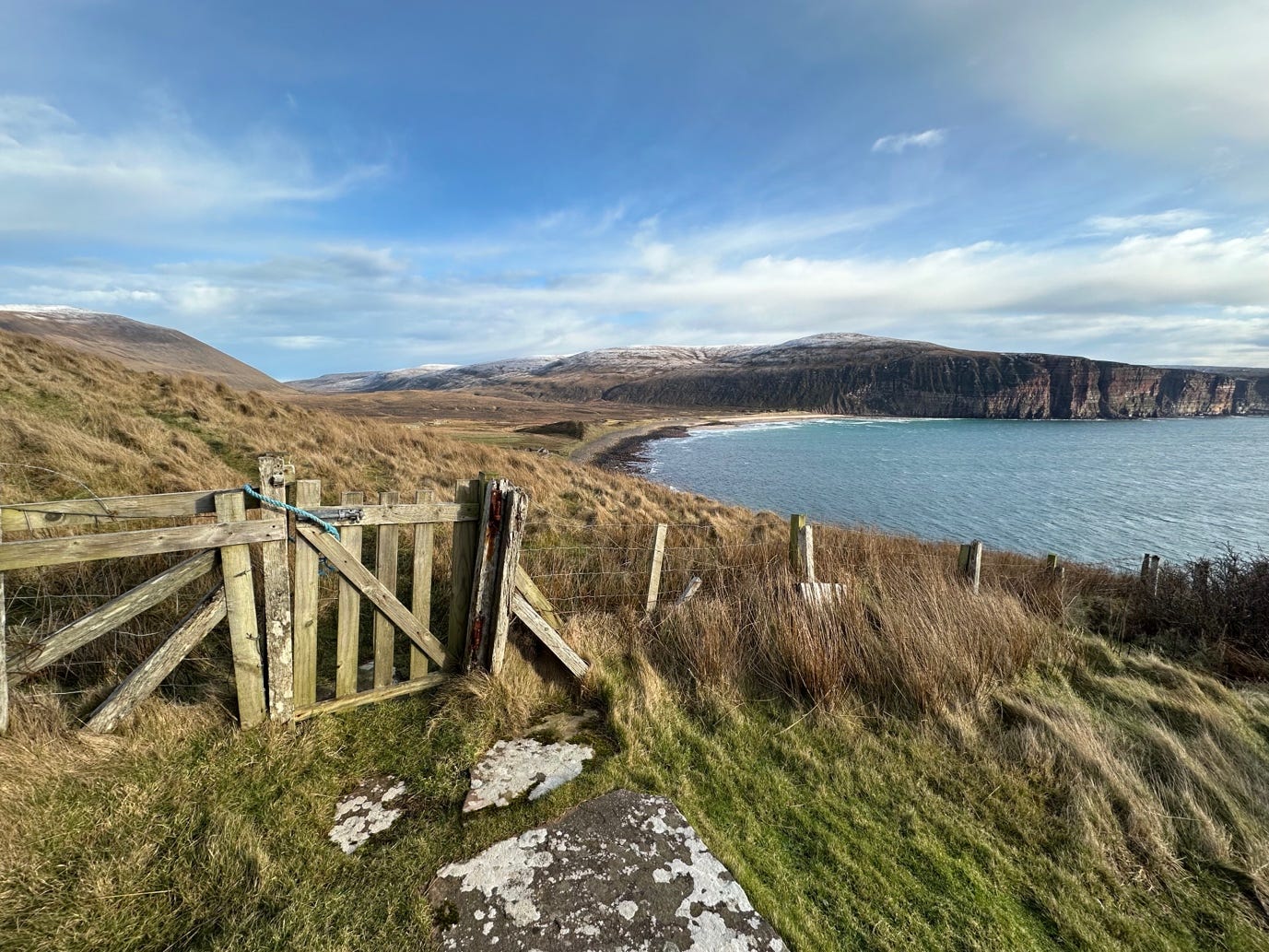
We have been coming here, about once a year, for over ten years now. The place is only reachable on foot by means of a narrow sheep path that crosses a couple of boggy streams as it climbs along the hillside, following the countour at an ankle-tweaking angle. There’s a short but lung-busting, leg-burning climb, when you’re carrying a heavy load, to reach the top of the hill. But once you pass through the little gate, dump your bags at the weatherbeaten front door as you fumble for the key, and wait for your breathing and heartbeat to slow, a deep peace descends.
You have now passed into Rackwick Time.
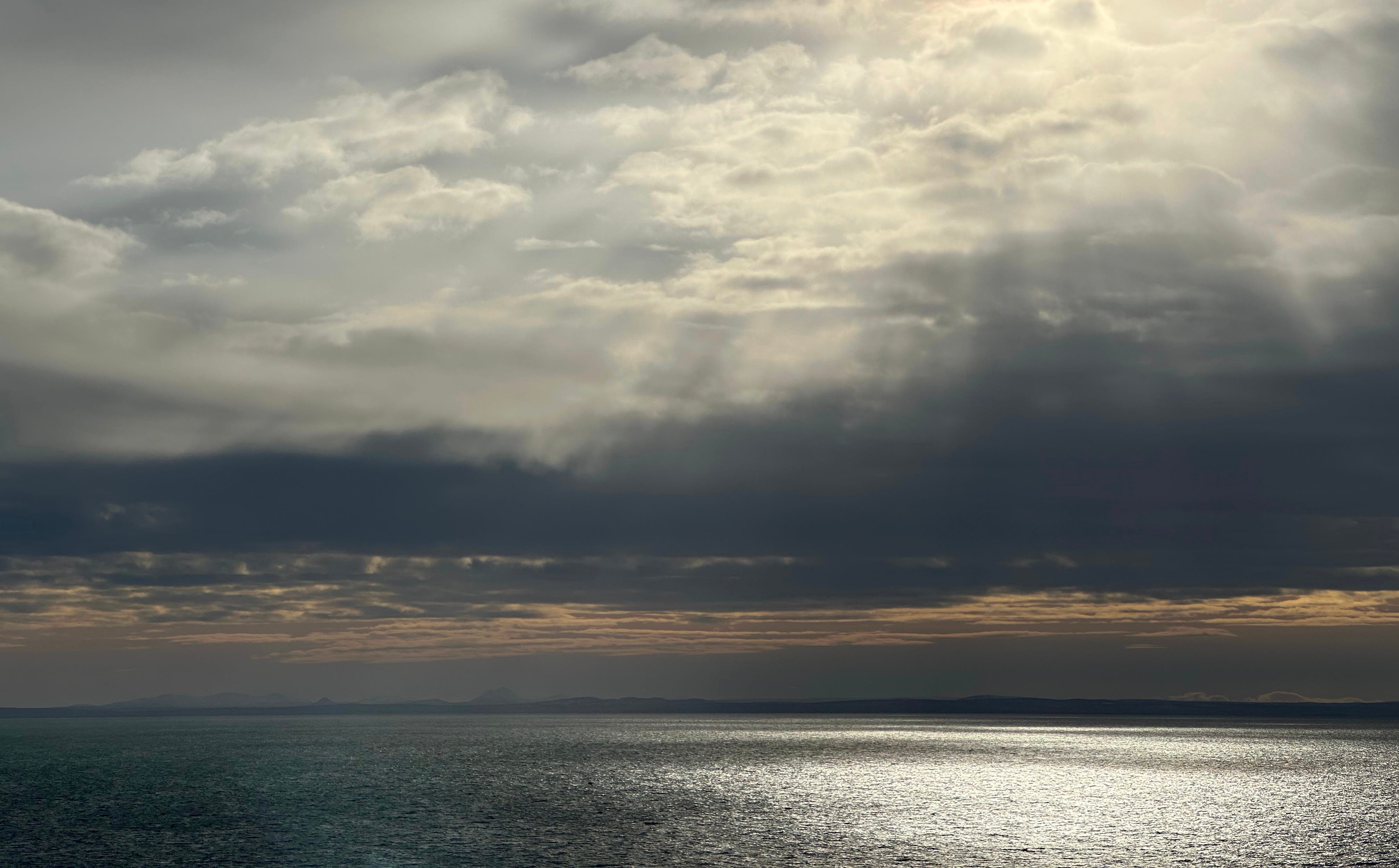
Rackwick Time moves to a slower beat. The slow swell rolls in over the beach and thumps at the cliffs as it has done for millennia. The light that flickers up from the sea far below is hypnotic. I can spend hours here simply watching the weather fronts roll in over the Pentland Firth.
Yes, that’s snow. And yes, it was cold. The February days are still short, and the wind bites at your fingers and cheeks. Long evenings are passed reading in lamplight, hugging the warmth of the stove. But there is an austere beauty to winter here, and a quiet you don’t find in summer when warm weather draws scores of visitors and day trippers.
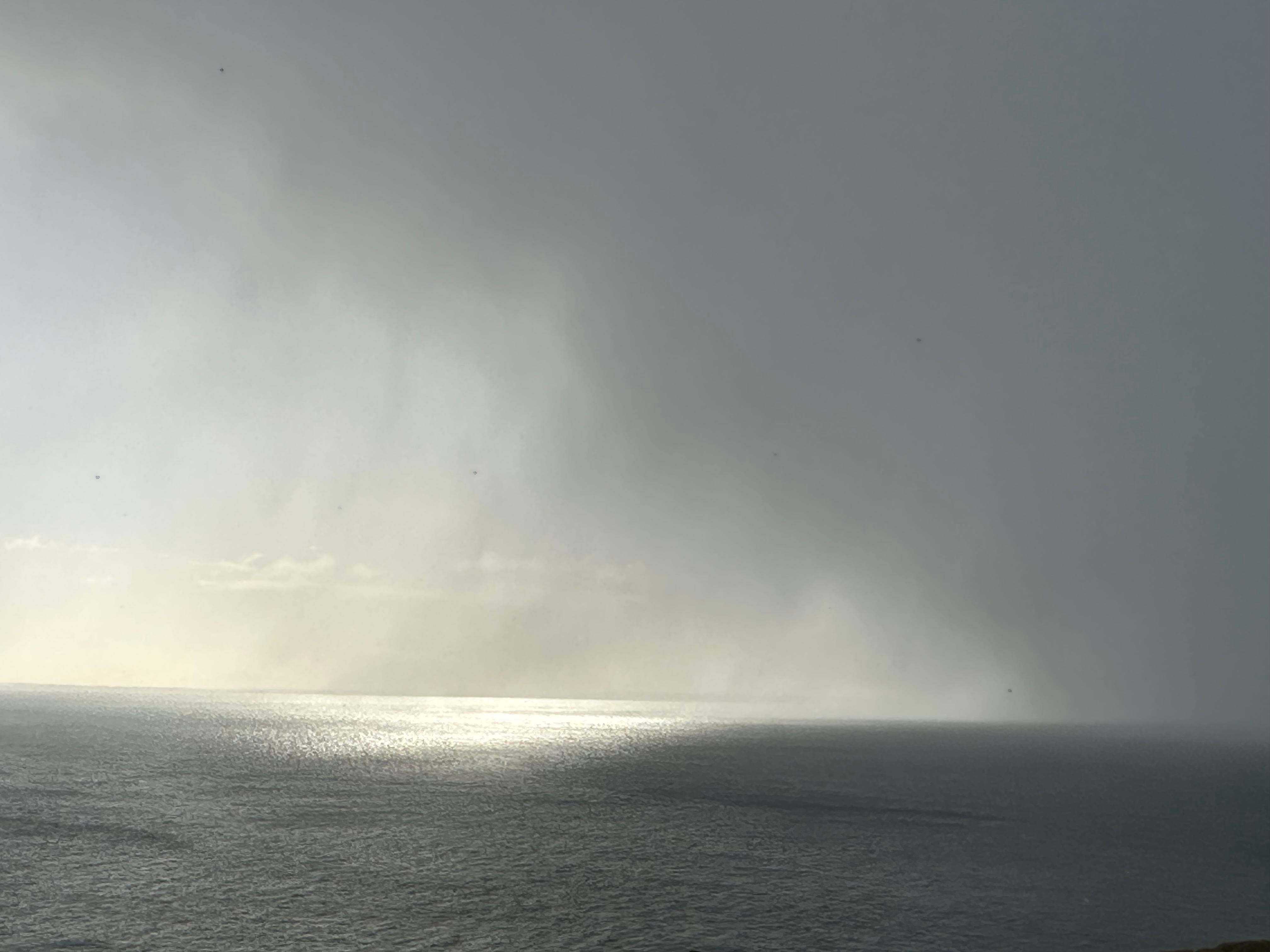
In winter, you can just sit and listen to the sounds of the wind, water and seabirds in the the bay below, where the tall red sandstone cliffs on the far side seem to act as a kind of sound mirror.
When you get very, very quiet and very, very still, lying awake in bed perhaps, you can hear a steady hum. It goes right through the house. We hear it at our home back in the West Mainland too. It’s just at the very edge of hearing. We have puzzled over the source of this almost sub-audible thrumming for years. At first I thought I had developed some queer low-frequency tinnitus and mentioned it to Andrew. He said ‘Oh, that. That’s the hum.’ Surely we couldn’t both be imagining it. After eliminating other possible sources, we decided it must be the sea, drumming on the stony shore, sending deep vibrations through the ground.
The composer Peter Maxwell Davies, known locally as ‘Max’, who lived in this little house for 28 years, described the special acoustic qualities of Rackwick in an interview for a radio programme in 1982. In particular, he mentions the hum, at 6:48. (Hooray! We’re not imagining it!) What’s more, he loved its harmonics, heard modulations of it in the wind and wove it into his music.
He also describes how the slow beat of the waves far below, the twice-daily tides, the circling of sun, moon and stars, and the yearly cycle of the seasons are rhythms that get into your bones here. Living and working in Rackwick with no electricity (at least for the first ten years) Max observed that “Clock time has no meaning here” but rather, “psychological time, when it’s not divided into seconds and it goes quickly or slowly depending…on what one is doing.” This is a “fluctuating time when time accelerates and retards and it’s a dimension which has got as much perspective and as much richness in it as space.“ In Rackwick, he explained “You relearn this in your own blood, with the rising and setting of sun and moon.”

There are even slower rhythms of time here too. Rackwick was a small settlement of crofters and fishermen dating from the 17th Century, but it began to dwindle from the 1930s when flu, old age and the loss of young folk emptied the crofts one by one. By the late 1960’s the little stone houses were crumbling and only one crofter, Jack Rendall, remained.
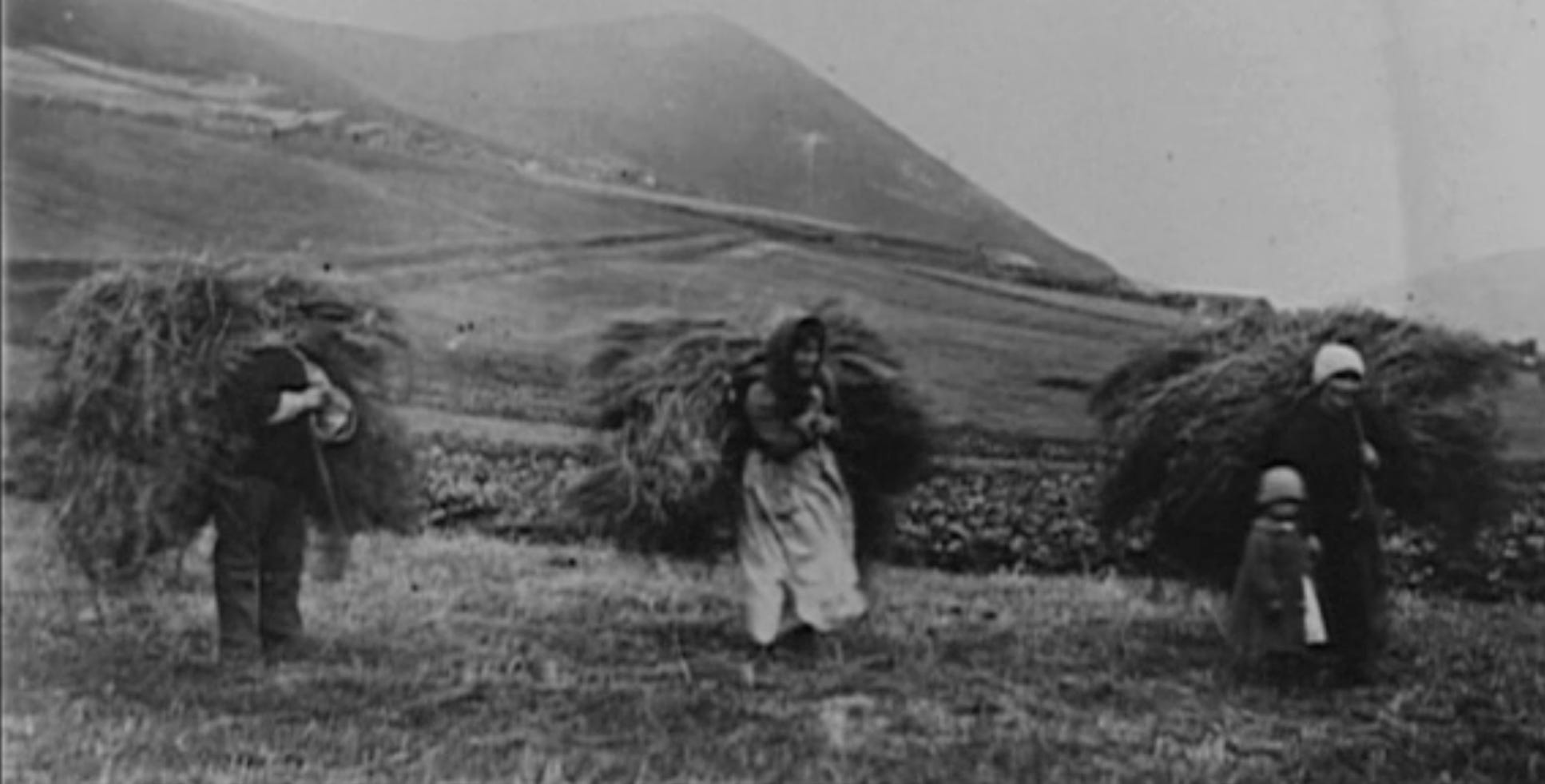
But the tide turned again. From the 70’s local families from Mainland Orkney began to holiday there. The local Boy’s Brigade began to bring groups to camp each summer, ensuring a new generation of Orcadian boys fell in love with the place. By the 1970’s a small creative community flourished around Max, his friend the Orcadian writer George Mackay Brown and the painter Sylivia Wishart.
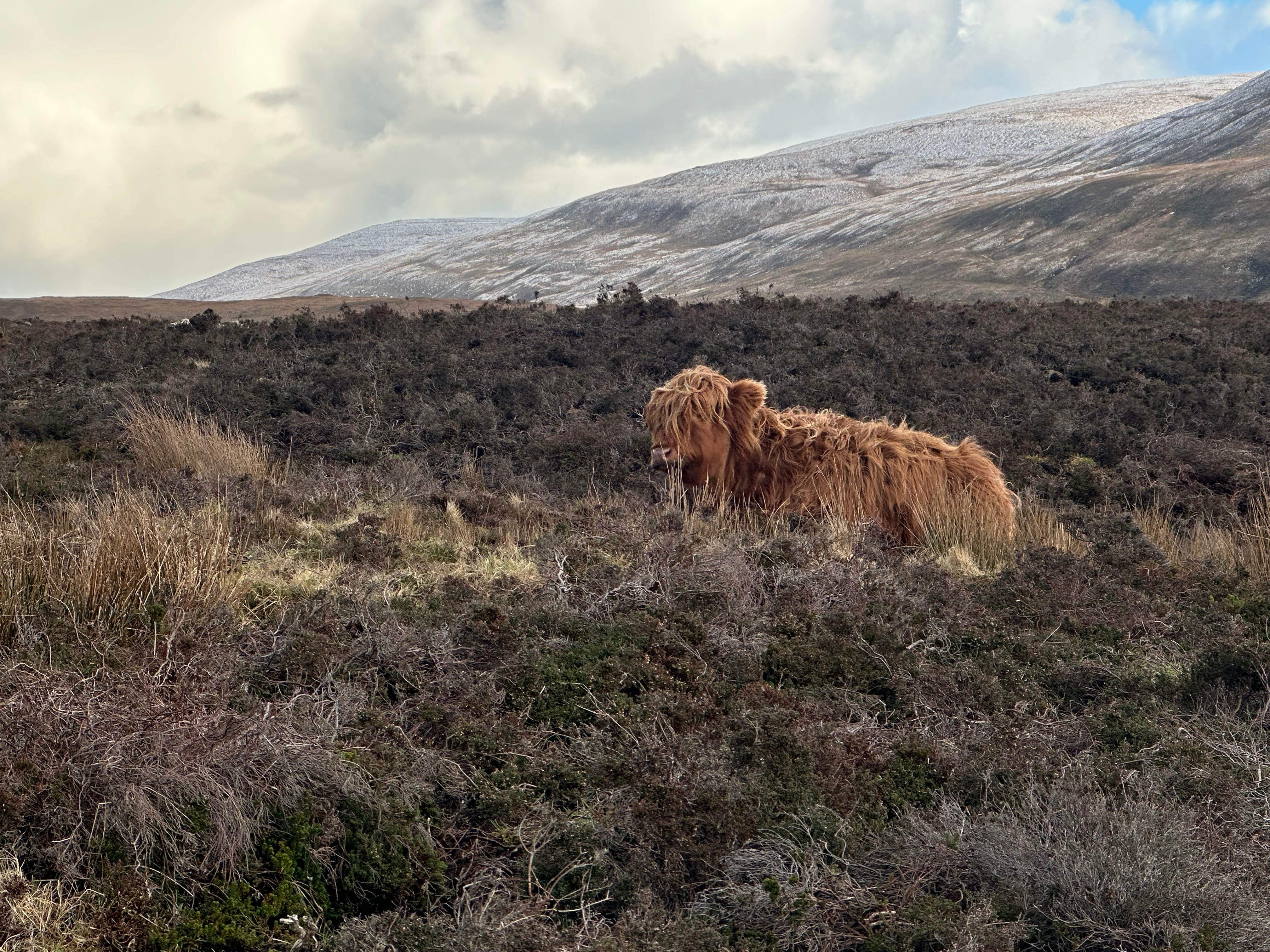
Now Rackwick’s houses are mostly watertight and cosy again. The permanent population is still small. Some sheep and cattle are raised, but many crofts are now much-cherished holiday places, refurbished by those same Orkney boys who camped here each summer and now bring their grandkids.
Spend time here and you feel the presence of those that have passed through this place, lives that flared and faded like the peat fires their long-gone hands once lit in these same stone hearths. Their eyes watched the same light pass over the same hills, their ears listened to the same wind and sea. As you pass beneath old stone lintels that others will cross when you’ve long gone you feel the brevity of your own life. But you also feel something else, something grounding, as if ‘now’ is not a brief finger-snap, but a plumb line dropped through time.
I wrote in a post last year about Thomas Pynchon’s resonant phrase ‘temporal bandwidth.’ Your temporal bandwidth is the width of your present, your ‘now’. Pynchon writes:
“The more you dwell in the past and the future, the thicker your bandwidth, the more solid your persona. The narrower your sense of Now the more tenuous you are”
The unsteadier your temporal footing, according to Pynchon, the more subject you are to a sense of frenetic, panicky hamster-wheel running on the spot. Connecting to the past, he argues, gives us a groundedness that keeps us steady.
In Rackwick, I can reconnect to that sense of solidity, of rootedness in time, and come away re-grounded.
I recognise the elasticity of time Max described experiencing while he was immersed in his work, especially if it was going well. For me, painting does this too. A painted mark is made with a momentary flick of the wrist, but it remains long after the hand has moved on. Long hours of quiet work are held there, stilled. In this way, a painting also drops a plumb line through time and becomes a way to deepen our temporal bandwidth.

We got home again on Sunday night, feeling like we had been away for weeks, not just a couple of days.
The Life Raft Creative Co-Working
Come and find time for your creative work. Join our weekly creative co-working session on Zoom. Our meetings are a little Life Raft of shared creativity in these stormy times. It’s very simple. We just say hello at the start and say what we plan to work on and then leave our cameras on and work together in companionable silence. We start at 3pm UK time and finish around 4.30pm. Just click the link below to join us. If you can’t make it live I share a recording to the paid subscriber chat each week.

That’s for all this week,
bye for now
Sam
P.S. You can still see some of my recent paintings at The Scottish Gallery in Edinburgh as part of ‘The Northern Isles: Part 2’ either in the gallery or online HERE.
This is marvellous. I thought you were going to say that we should be without a sense of the future or the past, that the dissolving of our persona was the goal, a la all the Western interpretations of Buddhist philosophy.... I'm going to go back and read again, but I don't think you are saying that, I think you're saying that understanding the lives that have gone before you in that place is grounding...
The frequencies and rhythmicity of the waves and “the hum” (plus the wide open island vistas) engages your parasympathetic nervous system and entrains your brain to produce more alpha and theta waves which breed alertness, calm and creativity. Your special environment plus your great talent are the perfect formula for your brilliant work. Isn’t that cool and amazing, Samantha?!