

Sun Moon Cloud
How colour is born from darkness

Hello friends
Last week brought us the first full moon of meteorological Spring. It’s known as the ‘worm moon’ because, supposedly, the soil is now warming and the worms are beginning to stir, although that still feels a few weeks off here.
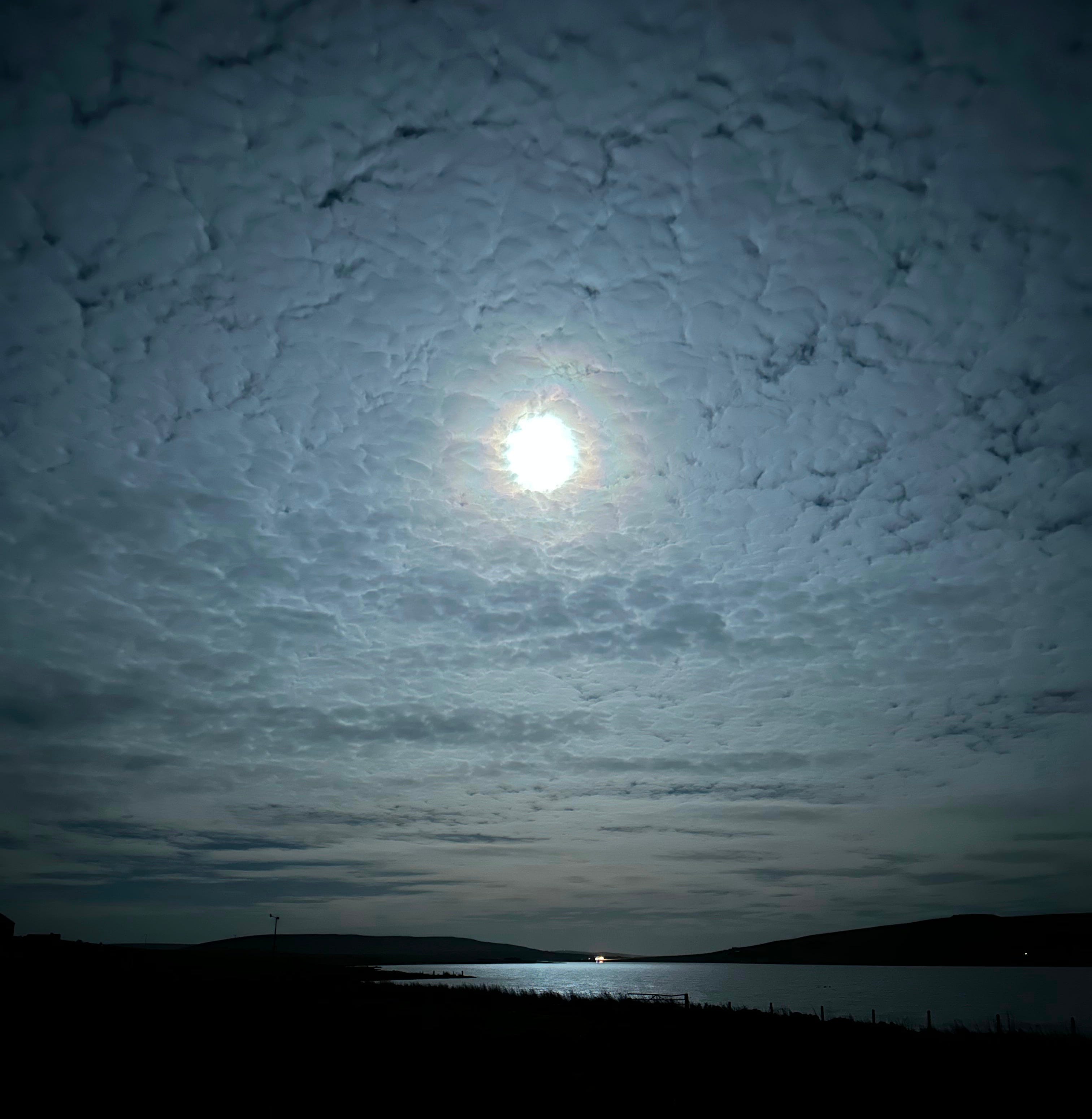
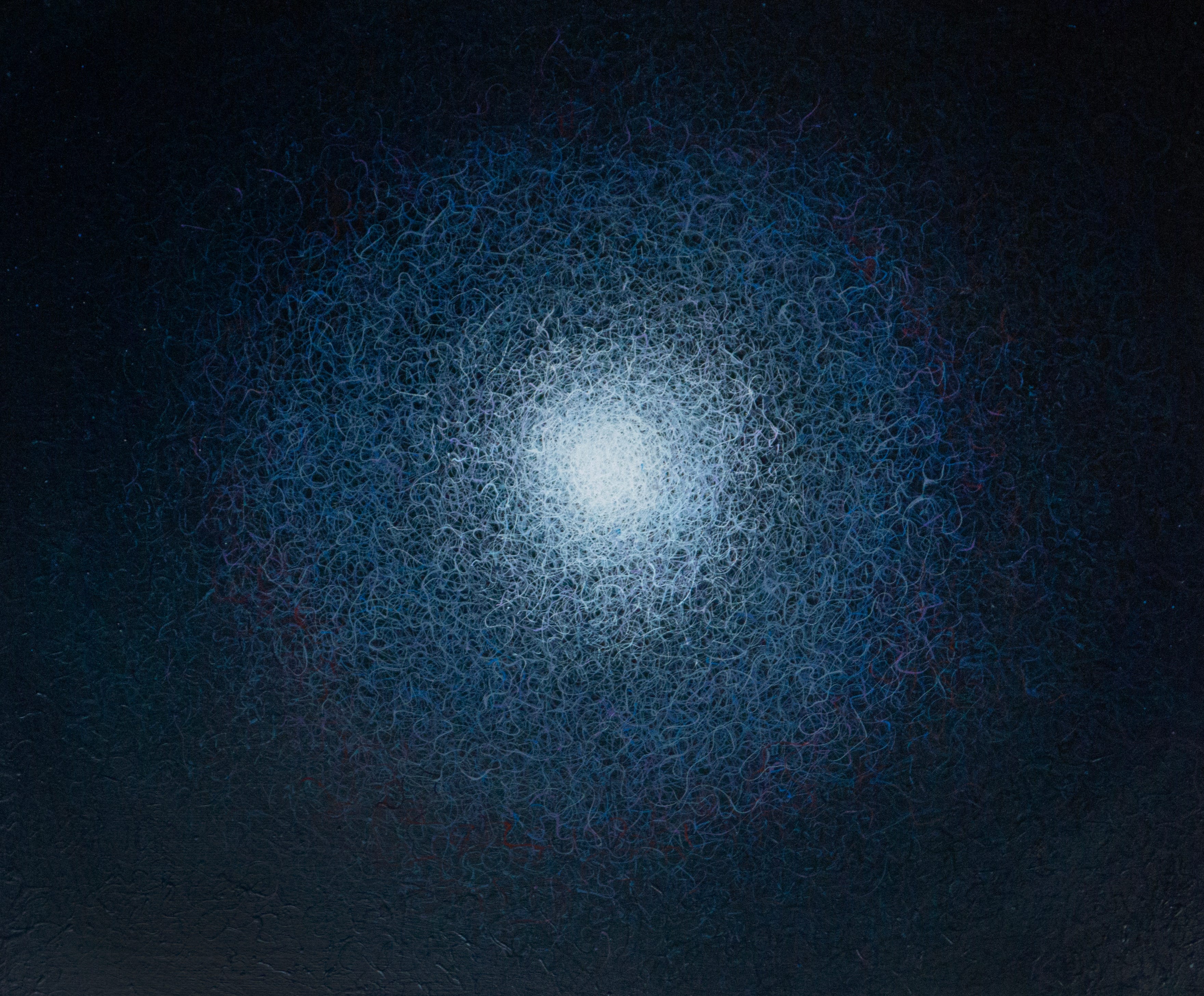
It appeared to us through a luminous veil of backlit cloud that created a soft lunar corona where it passed in front of the Moon, the true colours of which my camera couldn’t quite catch. In reality, a lunar corona shifts from bluish-white in the middle through to a dull red at the rim, as the Sun’s reflected light is diffracted through droplets in the clouds.
A while back, I made a first attempt to paint one.
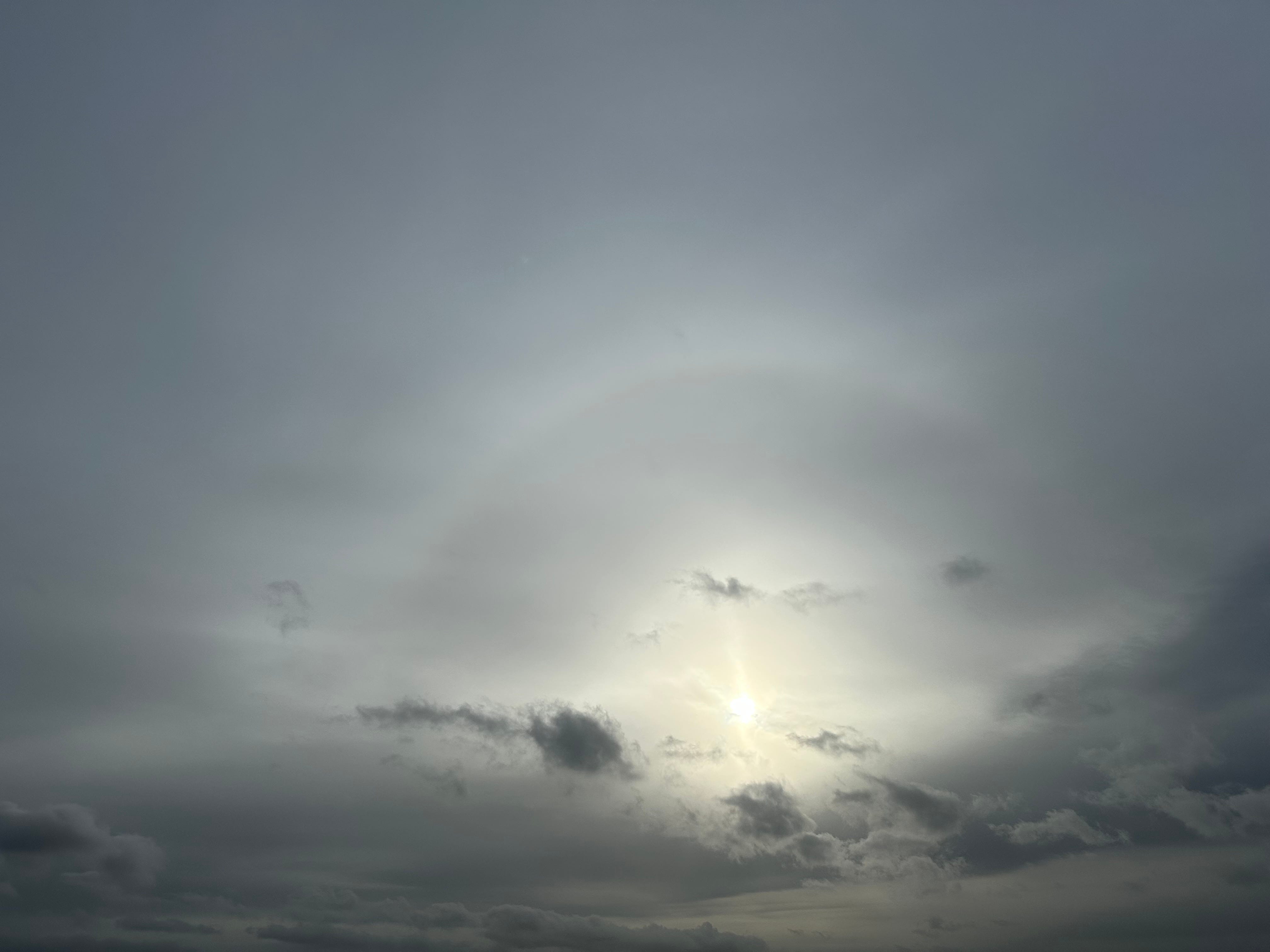
A few days before the lunar corona, I had seen a halo around the Sun, again caused by light diffracting, this time probably through high altitude ice crystals in the hazy sky. A subtle ring of prismatic colour circled the Sun, tinting the grey sky.
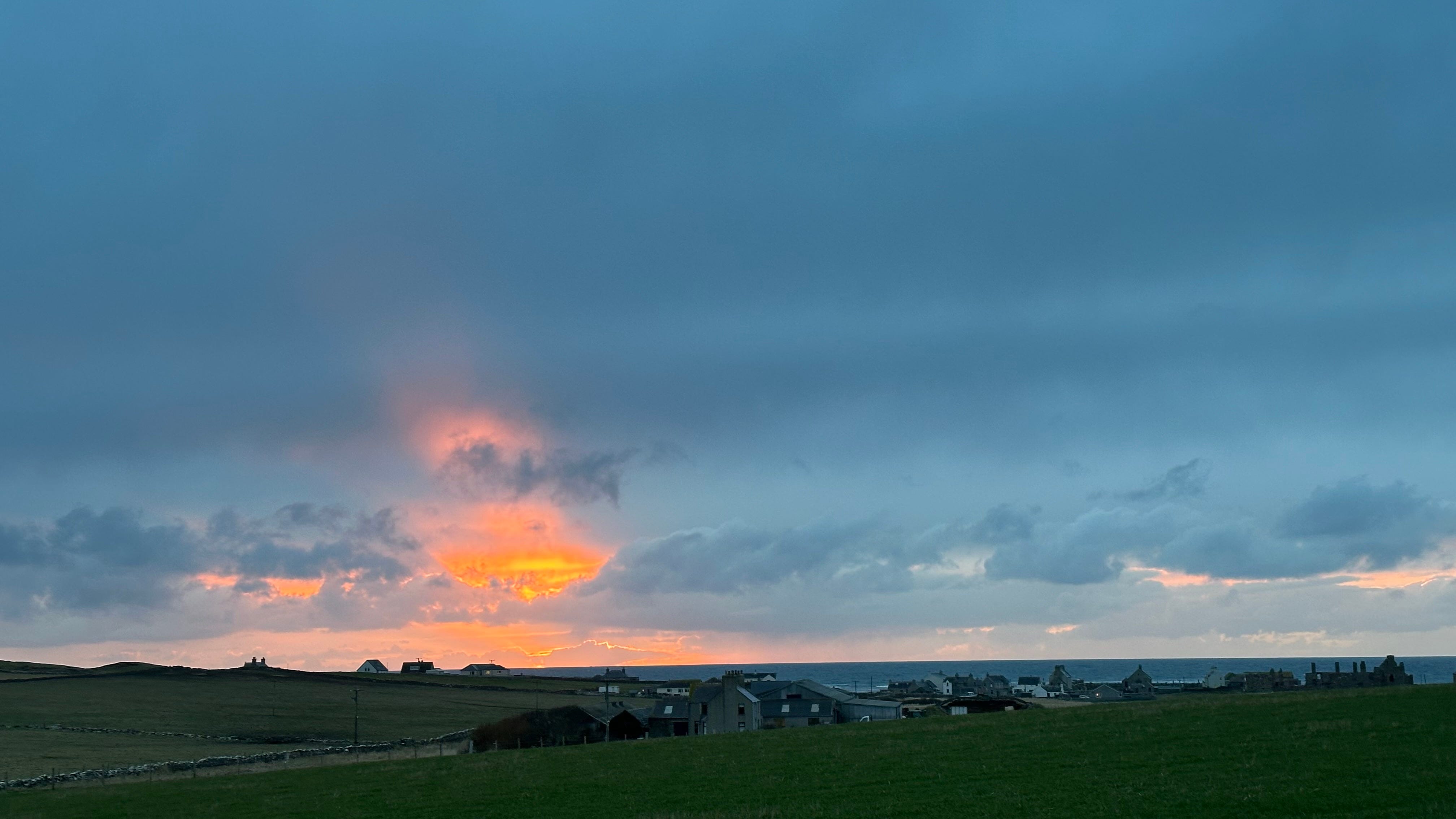
The day after the Worm Moon, an unusually fiery shaft of orange light seemed to shoot upwards from the setting Sun, apparently due to dust from a Saharan storm flung up into the atmosphere and blowing right across Europe.
It seems I am still seeing the world through Turner’s eyes after my immersion in his work at Tate Britain a couple of weeks ago, newly alert to how the movements of Sun, Moon and cloud create light and colour that are constantly shifting through the sky.
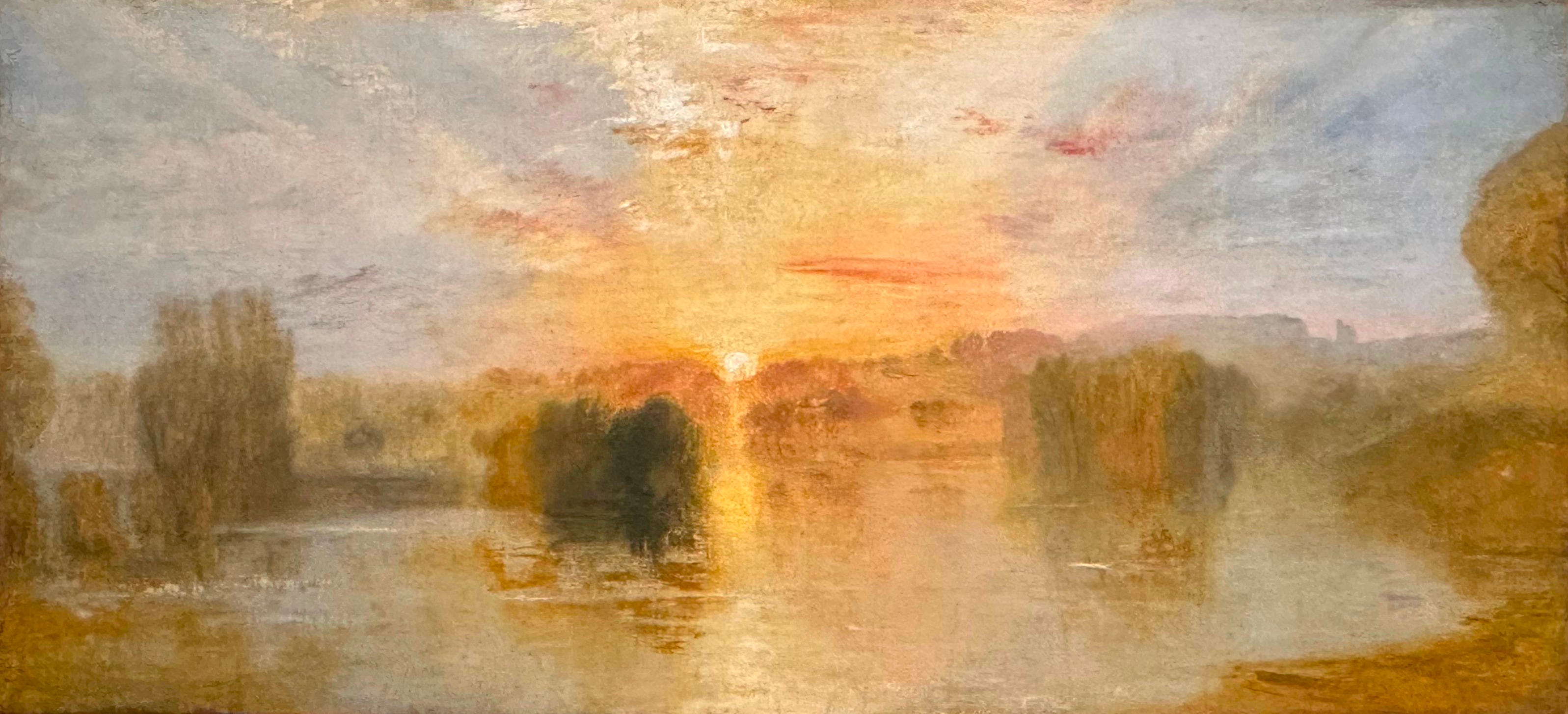
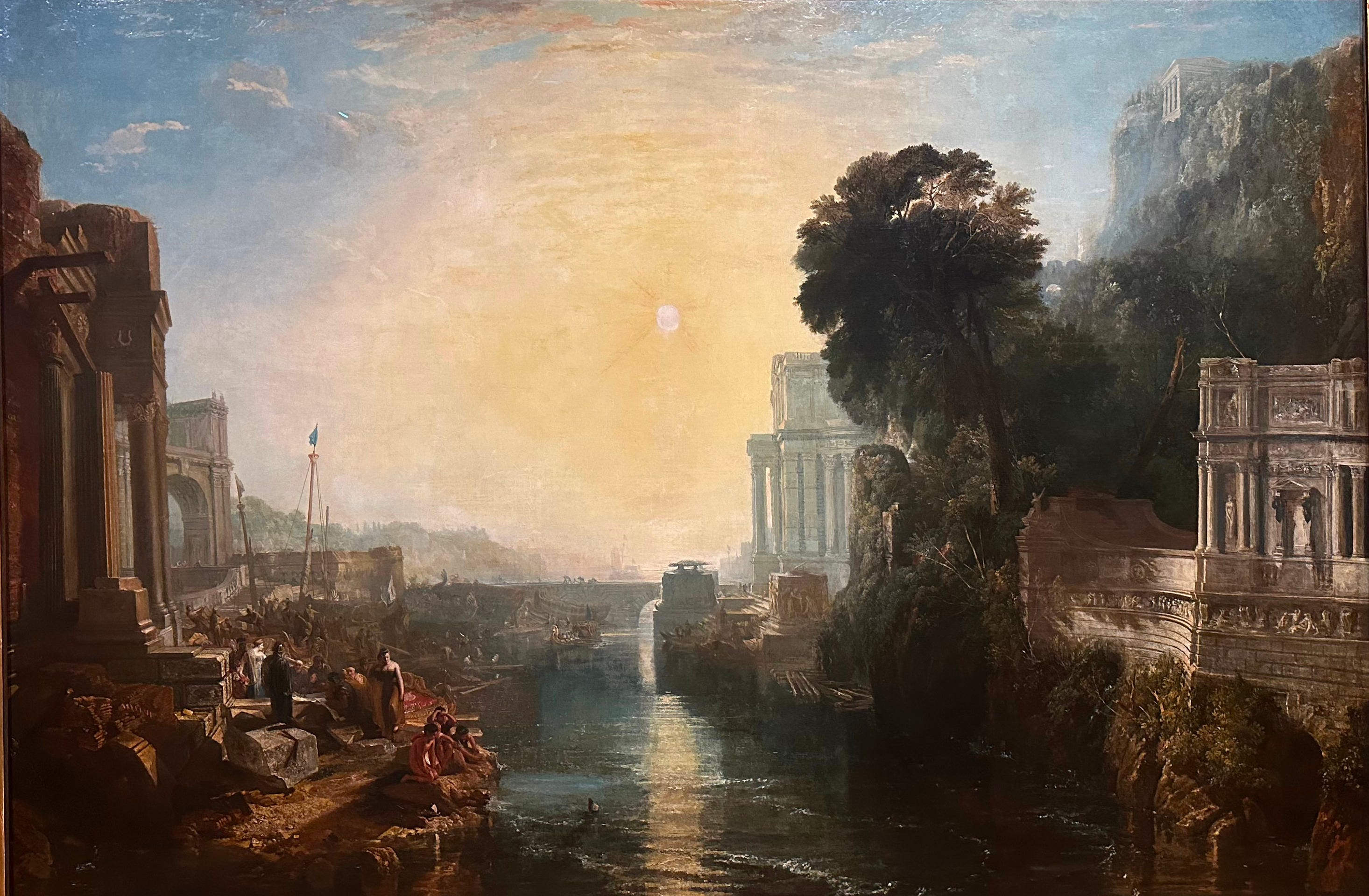
As Orkney starts to tilt decisively away from winter’s darkness towards summer’s flood of light, I also find myself revisiting Johan Wolfgang von Goethe’s thoughts on colour, and how it is born from a constant dance between light and darkness.
Roughly contemporary to Turner, the writer and polymath Goethe did not see darkness as just an absence of light, as most of his contemporaries did. He believed darkness was an active agent, and that light and dark act as opposing forces, like the poles of a magnet, interacting with each other to create the phenomenon of colour. Newton famously shone a narrow chink of light from a shuttered window through a prism to reveal how white light could be sliced up into the separate colours of the spectrum.
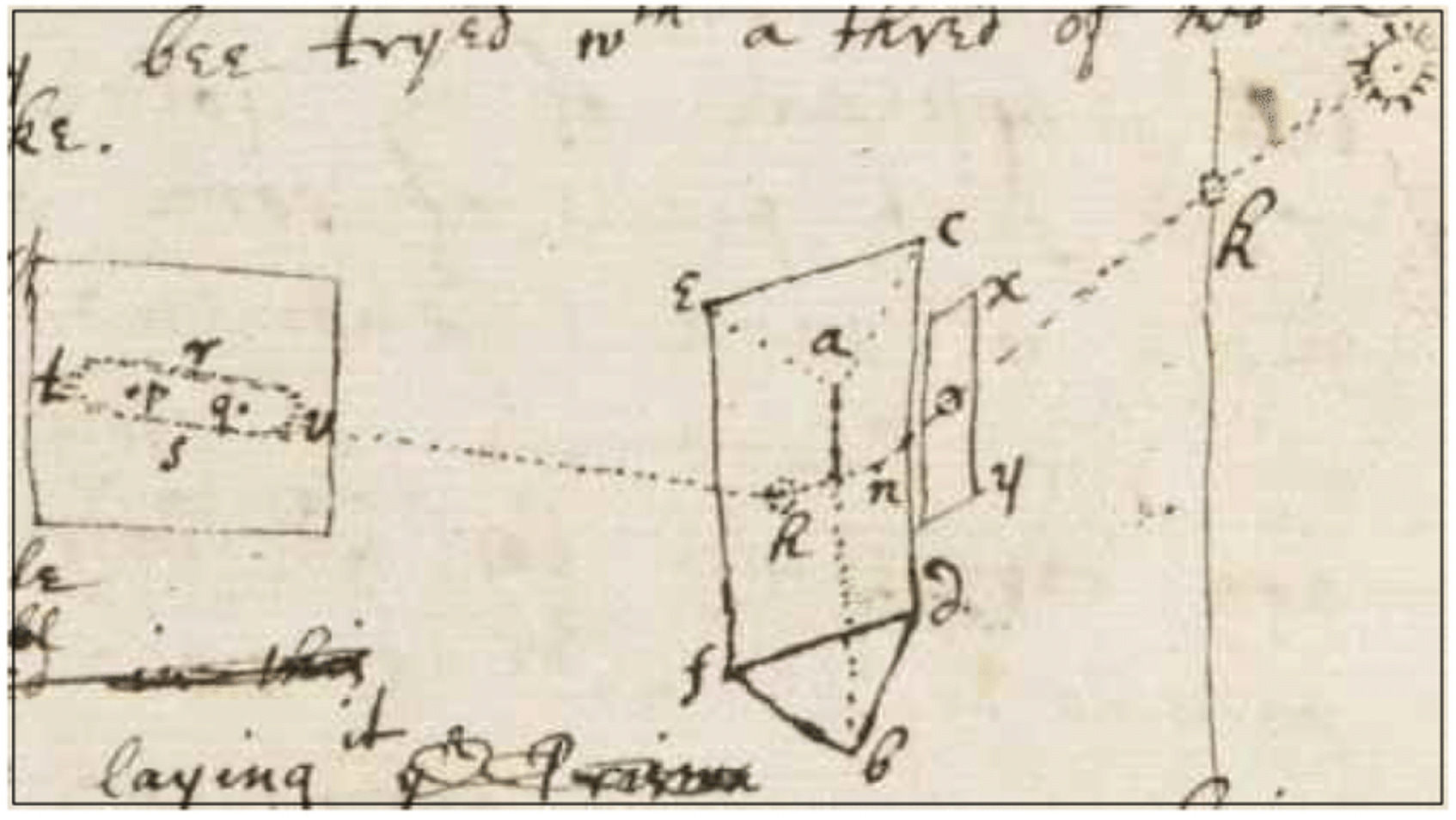
Goethe, on the other hand, wanted to understand light in its wholeness, watching how light behaves as it moves in the living world, not shuttered away in darkened rooms and bent out of shape by prisms.
Noting that on a clear day the sky overhead is a brilliant blue, becoming paler as it nears the horizon, and that if you go up a mountain the sky becomes an even darker violet, Goethe understood that when we look at the sky we are seeing its true darkness illuminated by the sun’s light as it passes through the ‘turbid medium’ of the atmosphere.
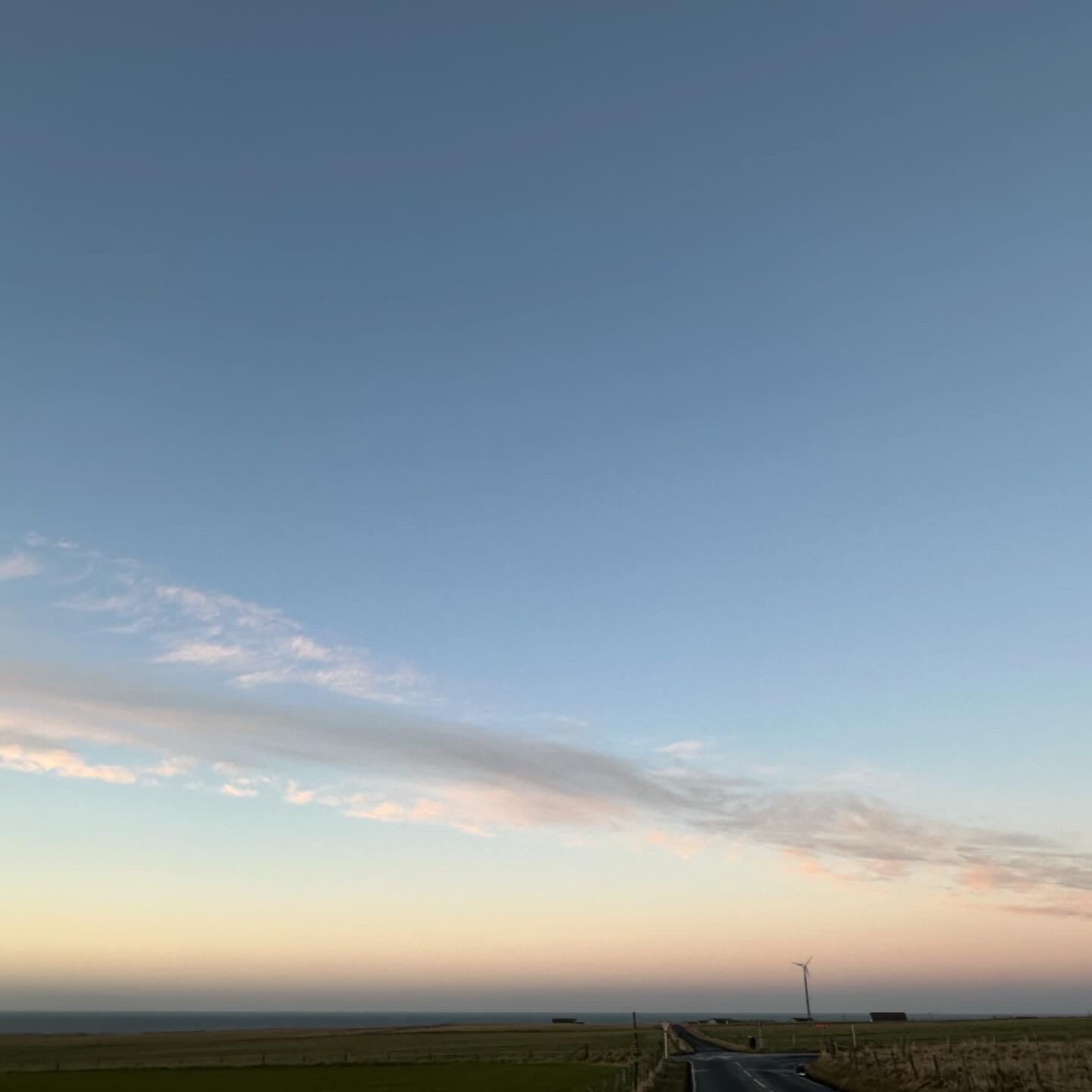
On the other hand, on a clear day the sun overhead is a very pale yellow, almost white in clear skies. But as it sinks towards the horizon it becomes orange, even deep red, as the atmosphere thickens and so darkens the sunlight. As the sun rises again, the atmosphere that we see it through becomes thinner, so it loses these warm, rich colours.
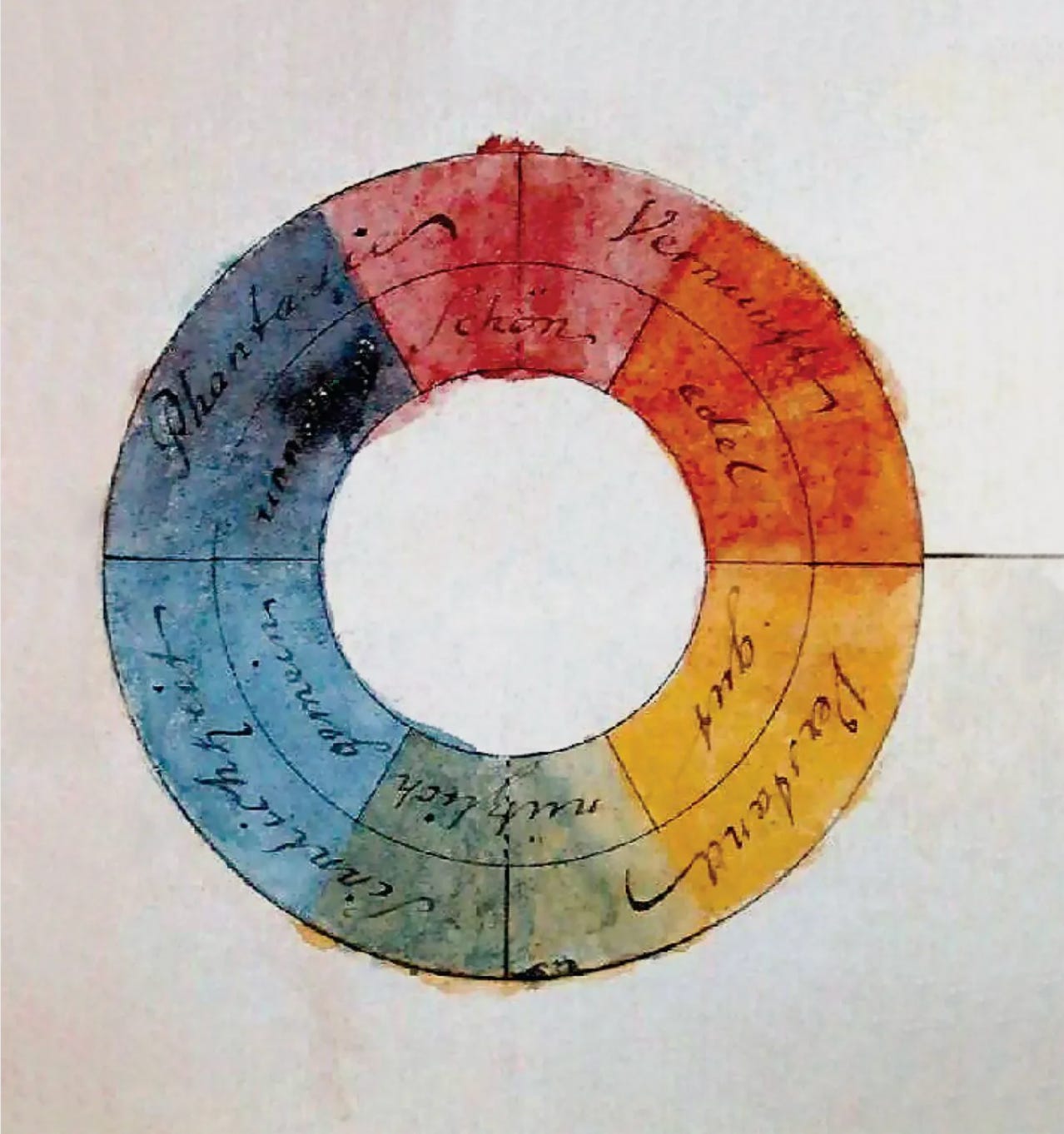
As Goethe watched the changing sky, he understood that colour emerged from the shifting balance of darkness and light, and that both light and dark are necessary for colour to emerge:
“Yellow is a light which has been dampened by darkness; blue is a darkness weakened by light.”
Goethe’s insight was that darkness isn’t just an absence of light. It’s an active agent, interacting with light to produce the effects we see as colour.
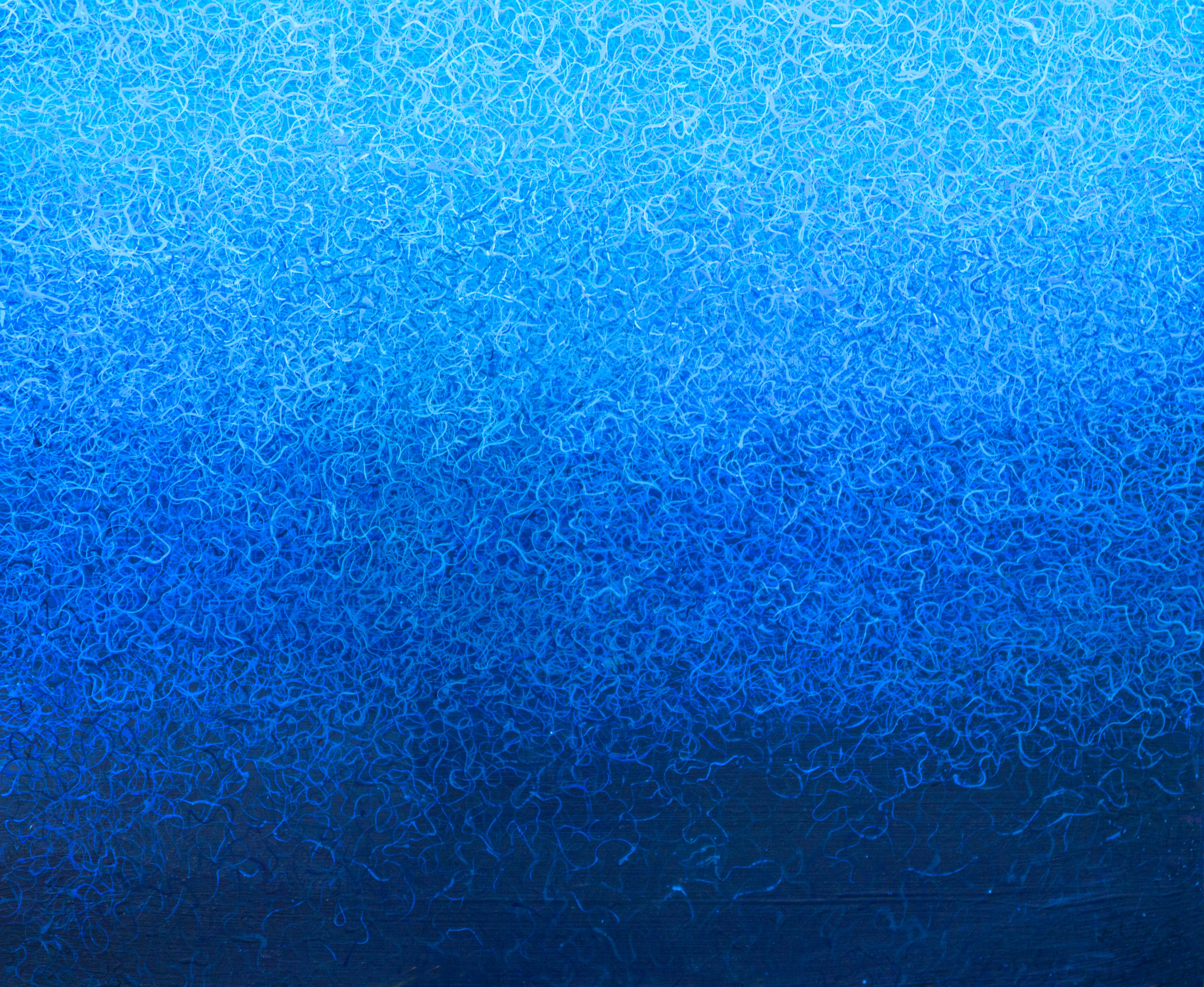
Our own seeing is part of this dance too. The eyes in our heads evolved over millions of years, ripening over uncountable generations in the patient sunlight.
Goethe said “the eye is formed by this light for the light so the inner light may meet the outer; for if the eye were not sun-like how could we perceive the light?”
There is light inside the eye too, known as entoptic light. Even in perfect darkness we see spots and sparks of light. When there is nothing left to see the brain invents light, known as ‘dark noise.’ Press your fingers to your eyeballs and you can see these inner fireworks for yourself, sparkling in the darkness.
So, maybe Goethe had a point, and there is an inner light within the sun-like eye. Our ‘seeing’ arises where this inner light meets the outer.
Where the paintbrush meets the surface is another point of contact where something arises, in the moment of gathering up a remembered sensation together with the current one.
Unfinished thoughts, from my studio, to yours.
Join the Life Raft Creative Co-Working Session
You are welcome our creative co-working session every Wednesday from 3 pm to 4.30 pm UK time. It’s very simple. We say hello, say what we’ll be working on, then leave our cameras on and work together in quiet companionship for an hour, then sign off at 4.30 with a quick check-in chat. That’s it! If you miss a session or can’t make it live, a recording will be made available to paid subscribers for two weeks after the session. You can find it in the subscriber chat HERE.

until next week!
Sam
So glad you mentioned Goethe and his colour theory. Based on long attentive experience, and constantly tinged with imaginative insight, it resonates strongly with an artist’s eye (and ear!)
Lovely post, and I too am hooked on Turner's depictions of light.....
The difference between the blueish tinge to dawn light and the red of sunsets also comes from the Doppler effect as well as the refraction of light by the atmosphere as Goethe says.
All to do with the sun moving closer towards us in morning and away at night.
This is a pretty good explanation I think:-
https://sites.imsa.edu/hadron/2024/04/02/the-colors-are-a-lie-the-doppler-effect-and-redshift/