

The great improvisation
life and art as jazz

Hello friends
In last week’s post I described the creative process as an unmarked path that’s made by walking. My own process certainly feels that way. A painting in progress always takes plenty of unexpected turns. Something might go ‘wrong’ and I have to pause and rethink. Or something delightful might occur, which also changes the direction the work takes.
As I begin to write these lines I confess I have no more than a hazy idea where I’m going with them. But I do know that only by setting the words down will I find out where they lead. Even then, the outcome will only be provisional. As soon as I get where I was going there will be another clue to follow and another fork in the path.
So, when I discovered Stephen Nachmanovich’s recently republished classic “Free Play: Improvisation in Life and Art” I picked it up and read it hungrily. It’s about the inner sources of spontaneous creation, about where art comes from, how creative inspiration arises and how it can get blocked or obscured.
More than anything, it’s a celebratory call to creative freedom and action. It’s written by a skilled musician who plays completely improvised concerts on the violin, but its lessons are applicable to all kinds of creativity, and indeed, to life.

The word ‘improvisation’ provokes something close to terror in most of us. It’s something for highly skilled musicians or comedians who like to live on the edge. But Nachmanovitch insists that improvisation isn’t something special. It’s something that we all do, every day of our lives:
“The most common form of improvisation is ordinary speech. As we talk and listen, we are drawing on a set of building blocks (vocabulary) and rules for combining them (grammar). These have been given to us by our culture. But the sentences we make with them may never have been said before and may never be said again. Every conversation is a form of jazz. The activity of instantaneous creation is as ordinary to us as breathing.”
The ebb and flow of conversation. Opening the fridge to see what to make for dinner. Making our way through in a busy city street. All of these are improvisatory, a dance between structure and spontaneity, life as a kind of creative play.
To offer our word ‘play’ a deeper resonance, Nachmanovitch offers us the Sanskrit term lîla. On one level it translates as ‘play’, but, he says:
“Lîla is richer than our word, it means divine play, the play of creation, destruction and re-creation, the folding and unfolding of the cosmos. Lîla, free and deep, is both the delight and enjoyment of this moment, and the play of God. It also means love.”
Lîla is simple, but it’s not easy. We may be immersed in it as children, but we soon lose contact with it as we grow and experience the complexities of life. With perseverance we can rediscover this deep play and “its coming to fruition is a kind of homecoming to our true selves.”
“Spontaneous creation comes from our deepest being and is immaculately and originally ourselves. What we have to express is already with us, is us, so the work of creativity is not a matter of making the material come, but of unblocking the obstacles to its natural flow”
Nachmanovitch sees the creative path as a spiritual one:
“The creative process is a spiritual path. This adventure is about us, the deep self, the composer in all of us, about originality, meaning not that which is all new, but that which is fully and originally ourselves.”
He invites us to ask ourselves what it might mean to approach our entire lives as creative practice, “beyond the drive to create” he says, “is a yet deeper level of commitment, a state of union with the whole that is beyond us.”
The self we come home to on this path is not the egoic self, but something much more expansive.
Nachmanovitch acknowledges that this approach to a creative life is risky. The fear is real:
“While on some dimensions living a normal life, you are nevertheless a pioneer, venturing into new territory, breaking away from the molds and models that inhibit the heart’s desire, creating life as it goes. Being, acting, creating in the moment…can be supreme play, and it can also be frightening…In creative work we play undisguisedly with the fleetingness of our life, with some awareness of our own death.
Every moment is precious, precisely because it is ephemeral and cannot be duplicated, retrieved, or captured.”
But embracing spontaneous creation is not about dumping our hard-won skills and abandoning all sense of rigour. To achieve anything artistically you have to acquire technique, but, Nachmanovitch insists, “you create through your technique and not with it.” We pass beyond competence to presence.
Improvisation is not a chaotic free-for-all. We create within the world as it is given to us, in response to its patterns and parameters.
“Looking out, now, over the ocean, the birds, the vegetation, I see that absolutely everything in nature arises from the power of free play sloshing against the power of limits. The limits may be intricate, subtle, and long-lived, like the genetic structure of the orange tree before me. But the pattern of the ocean, the pattern of the orange tree or the sea gulls, arises organically; it is a self-organising pattern. The self organizing activity arises, slowly changes, suddenly shifts, learns from mistakes, interacts with the ways of its fellows and its environment. These creative processes inherent in nature are called by some people evolution, by others creation. The undending flow through time and space of this pattern of patterns is what the Chinese called the Tao.”
Everything we make and do is part of this unfolding conversation. It’s a call-and-response we engage in with the world, where nobody has the last word and none of us knows how it ends.
As his book’s title suggests, Nachmaovitch insists on fusing art and life:
“If we act out of separation of subject and object – I, the subject, working on it, the object – then my work is something other than myself; I will want to finish it quickly and get on with my life…if art and life are one, we feel free to work through each sentence, each note, each colour, as though we had infinite time and energy.
Having this lavish, abundant disposition toward our time and our identity, we can persevere with a steady and cheerful confidence, and thus accomplish more and better”
Sign me up. A steady and cheerful confidence sounds like something worth aspiring to.
Key to this is to embrace our work as our practice:
“The Western idea of practice is to acquire a skill. It is very much related to our work ethic, which enjoins us to endure struggle or boredom now in return for future rewards. The Eastern idea of practice, on the other hand, is to create the person, or rather to actualize or reveal the complete person who is already there. This is not practice for something, our complete practice which suffices unto itself.”
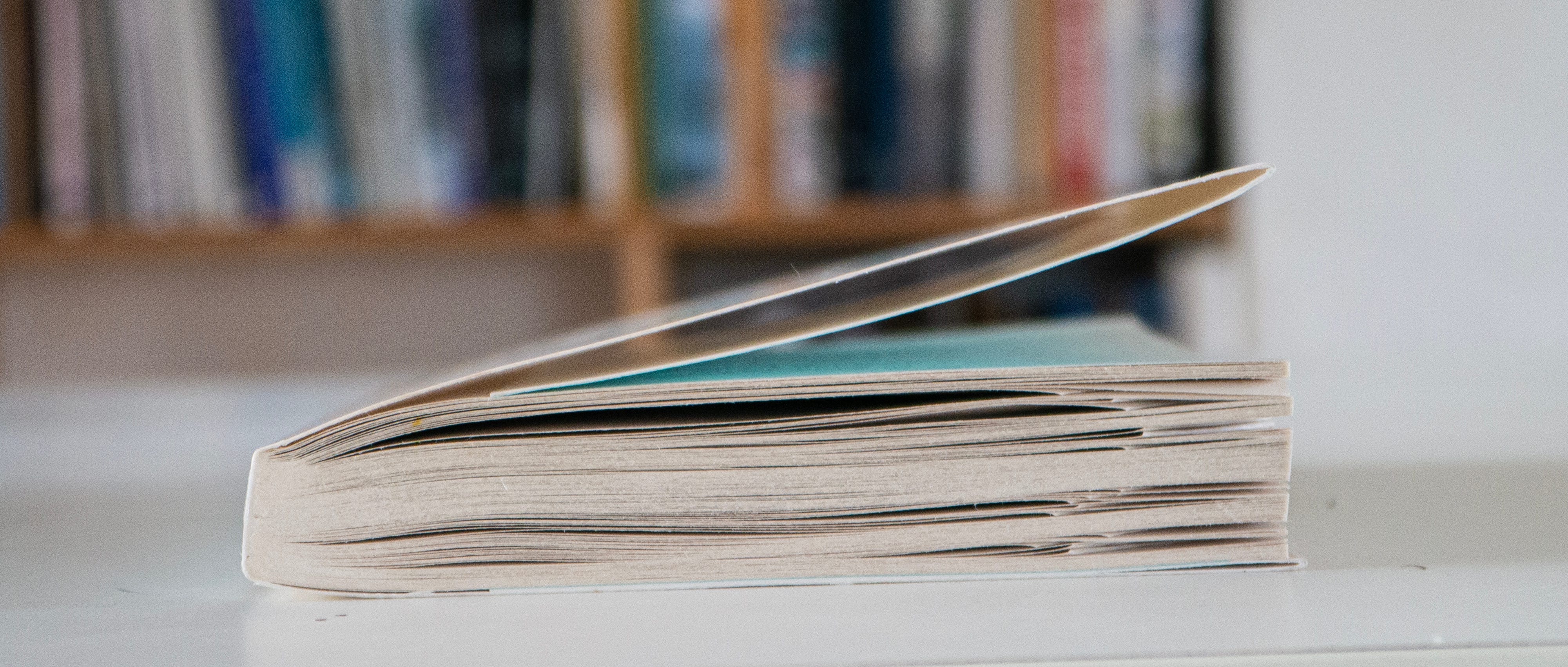
There is much more to glean from this slim paperback if these nuggets touch a chord for you. My copy is already marked up with pencilled notes and underlinings, and kept at hand ready for another browse.
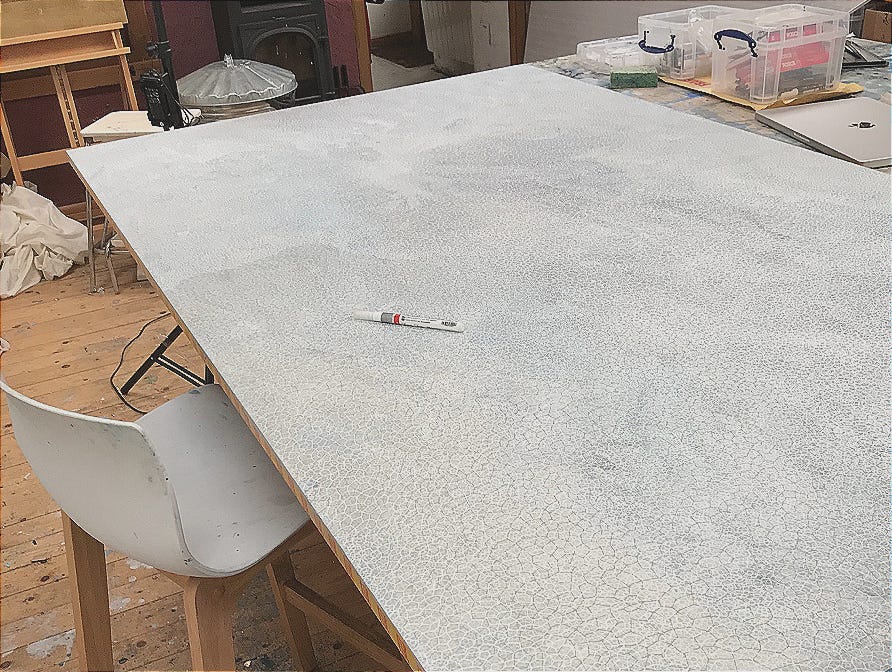
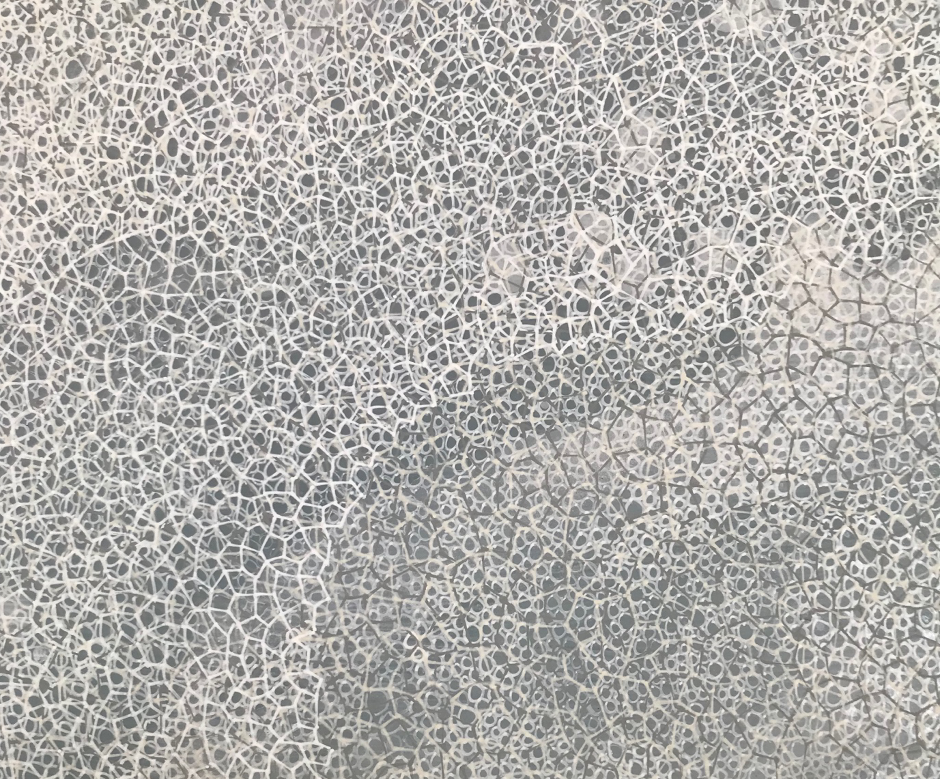
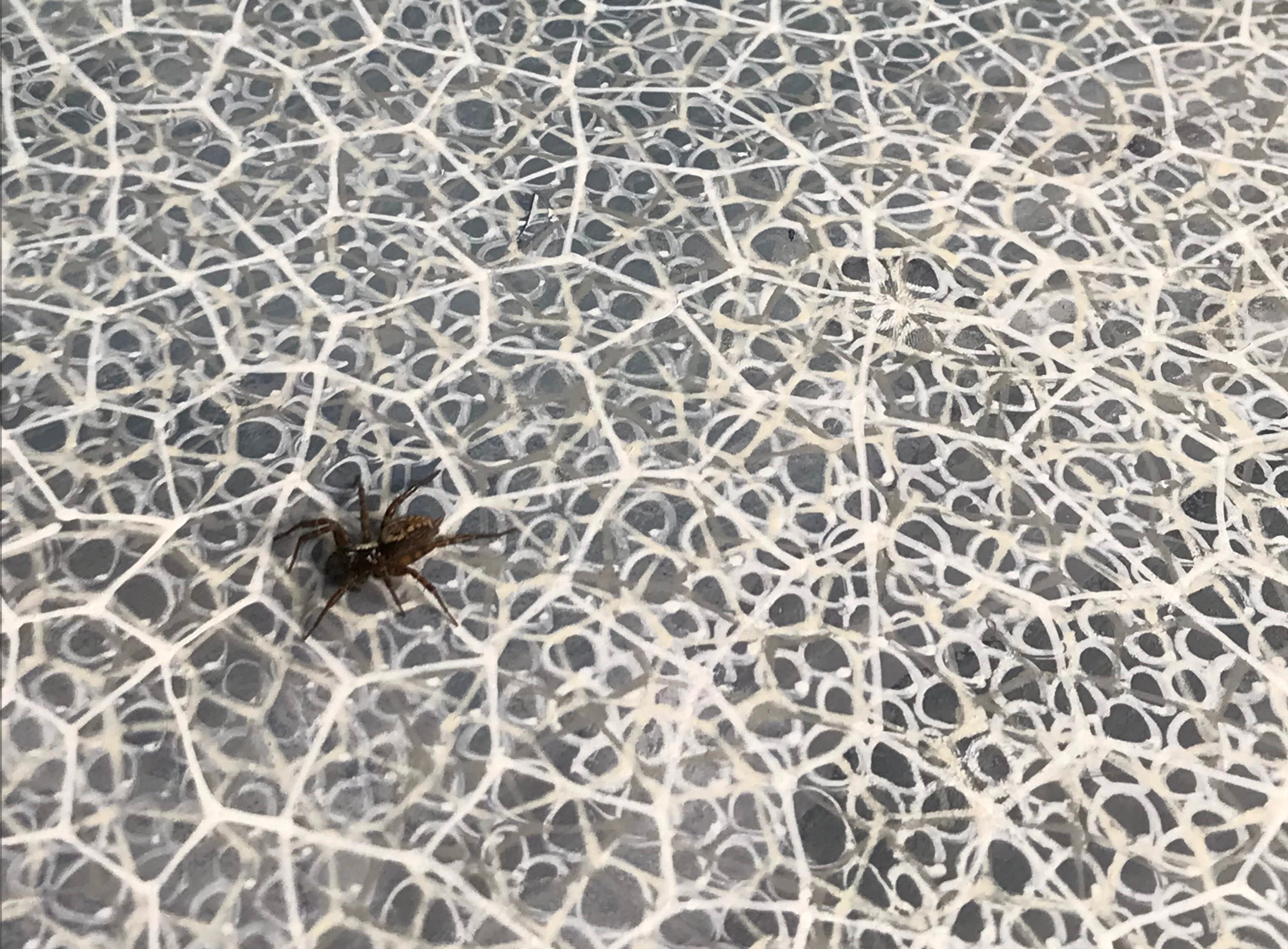
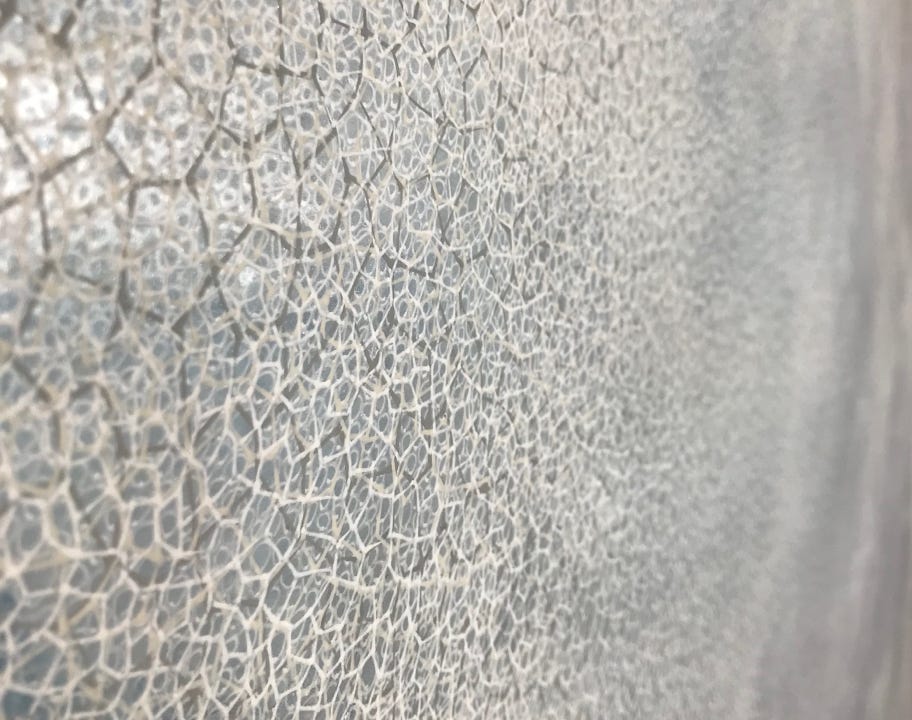
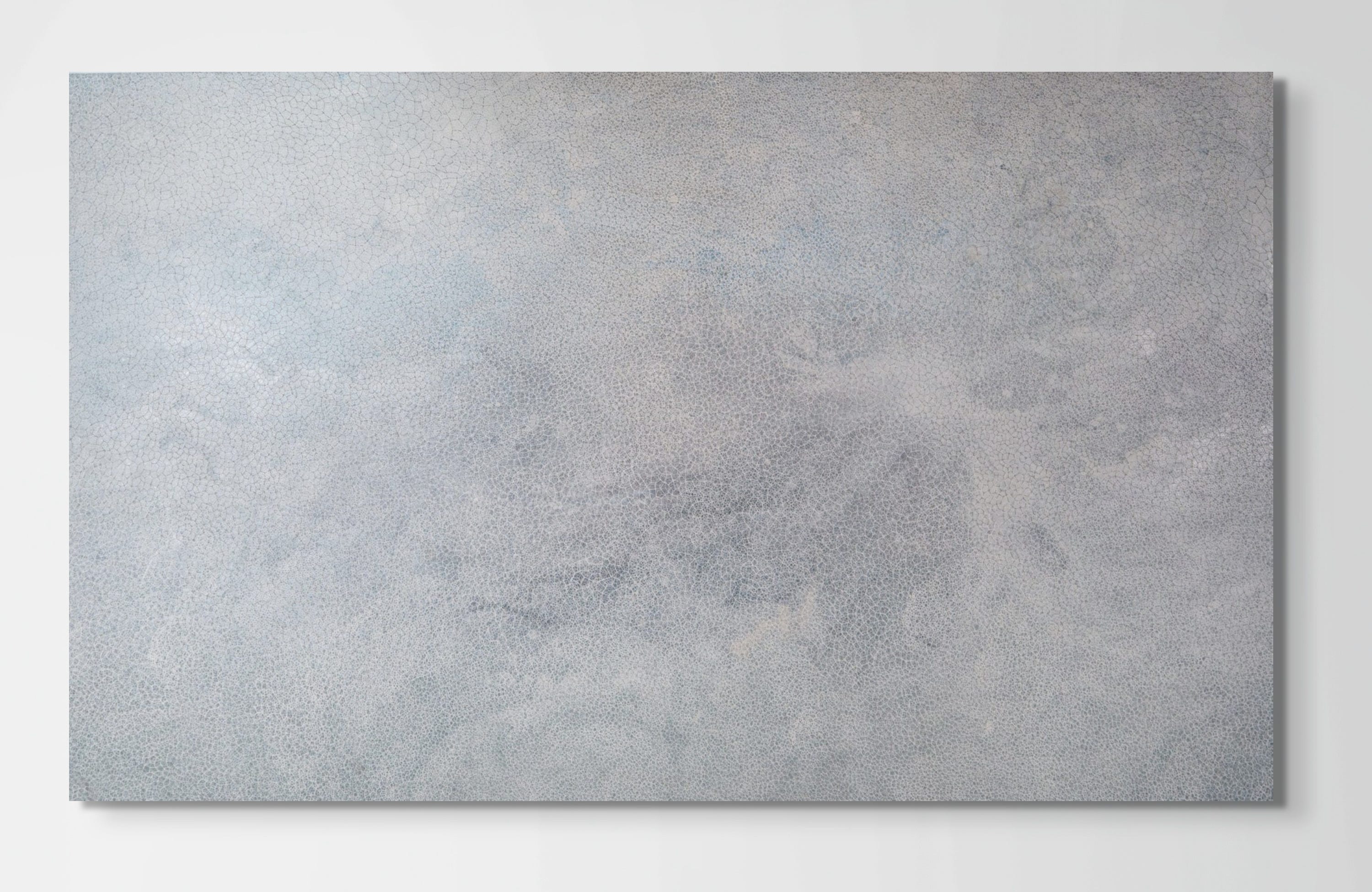
You can see more results of my own creativity-as-improvisation at Bowhouse in Fife, where I have recent paintings in the exhibition Making Waves - Breaking Ground. If you can’t make it in person you can download the full catalogue below.

The Life Raft Co-Creating Community
If you’d like to work on that steady and cheerful confidence in good company, you are warmly welcomed to join our weekly creative co-working session on Zoom. Our meetings are a little Life Raft of shared creativity in these stormy times. It’s very simple. We just say hello at the start and say what we plan to work on and then leave our cameras on and work together in companionable silence. We start at 3pm UK time and finish around 4.30pm. Just click the link below to join us. If you can’t make it live I share a recording to the paid subscriber chat each week.

That’s all for this week!
Sam
Such a great book, for artists of any discipline!
Thank you Samantha for sharing parts of this book, it sounds like one to get and linger over.
As I don't live in the British Isles I cannot get to the exhibition but the catalogue which you generously allowed us to download is magnificent. Such a varied group of dedicated artists work, it is inspirational.