

When the grass dances
A collaboration of friends

Hello Friends
Orkney is a land of few trees, but its soils are remarkably fertile. In summer, these northerly islands become a sea of lush grasses; pastures grazed by cattle and sheep, fields of silage and barley for winter fodder and straw bedding, or tufty thickets growing along the roadside ditches.
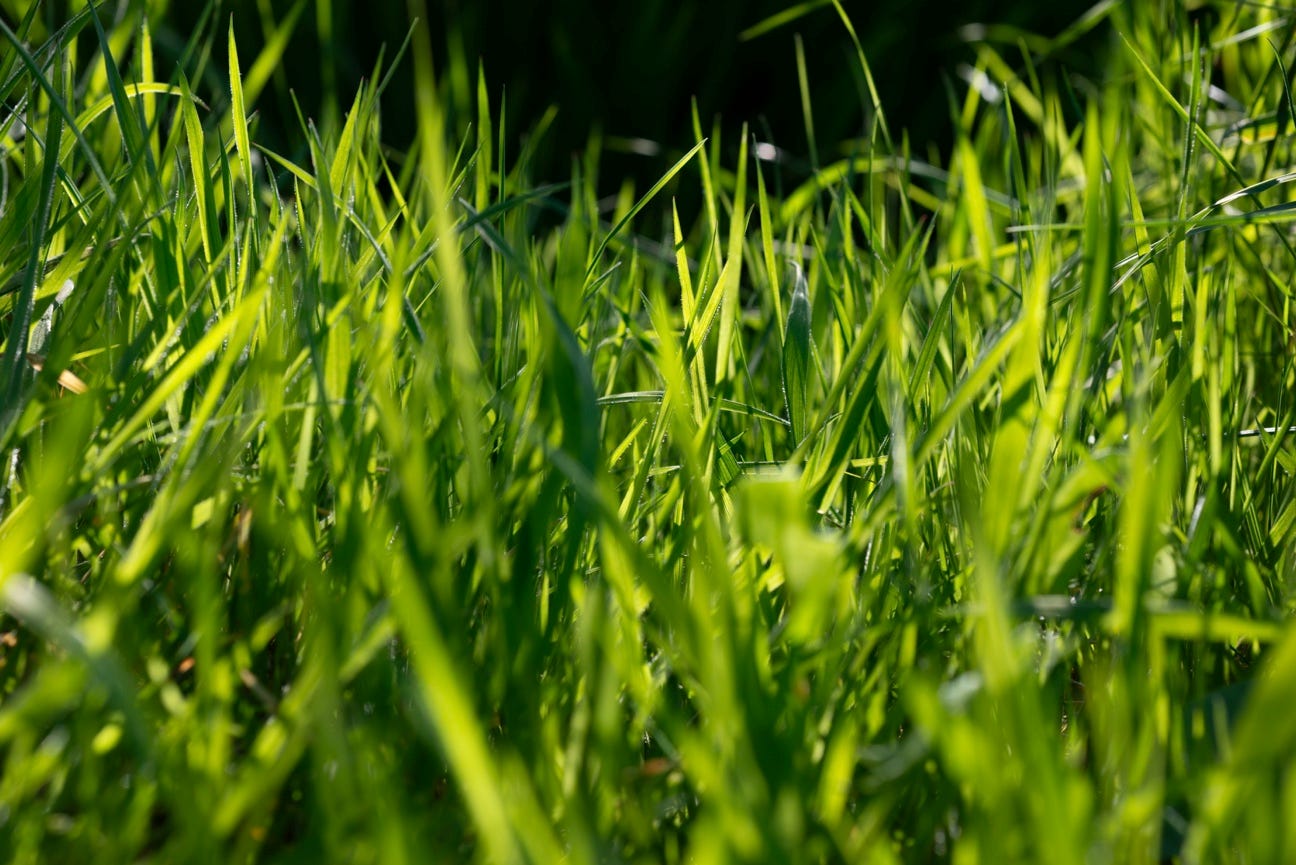
The shimmering seas of fresh green blades that grow to meet the flood of sunlight in early summer give way, as the season turns, to ripples of soft bronze and gold seedheads. By winter’s end the fields will be a tired yellow-green pocked with muddy puddles, awaiting the return of the light.
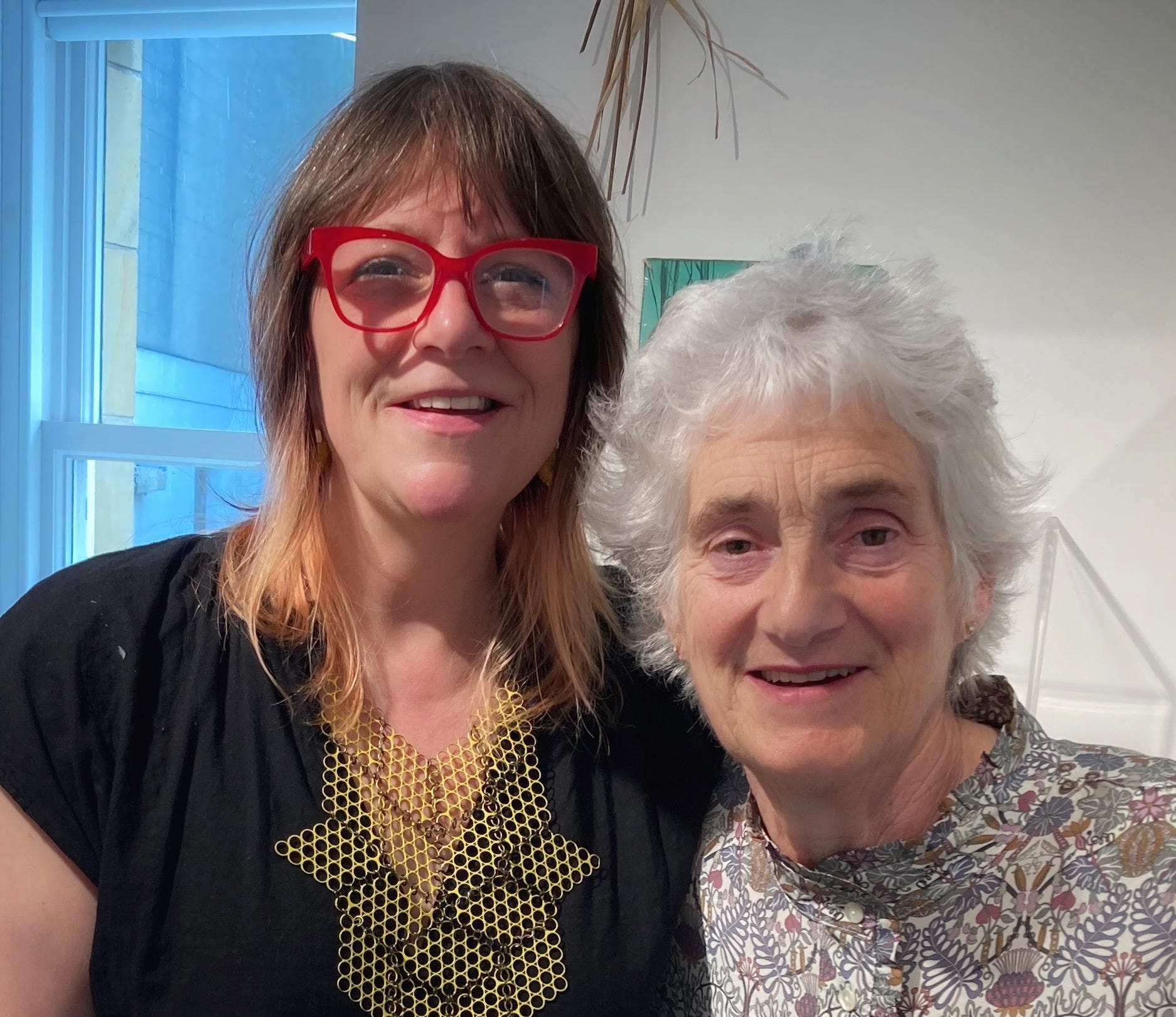
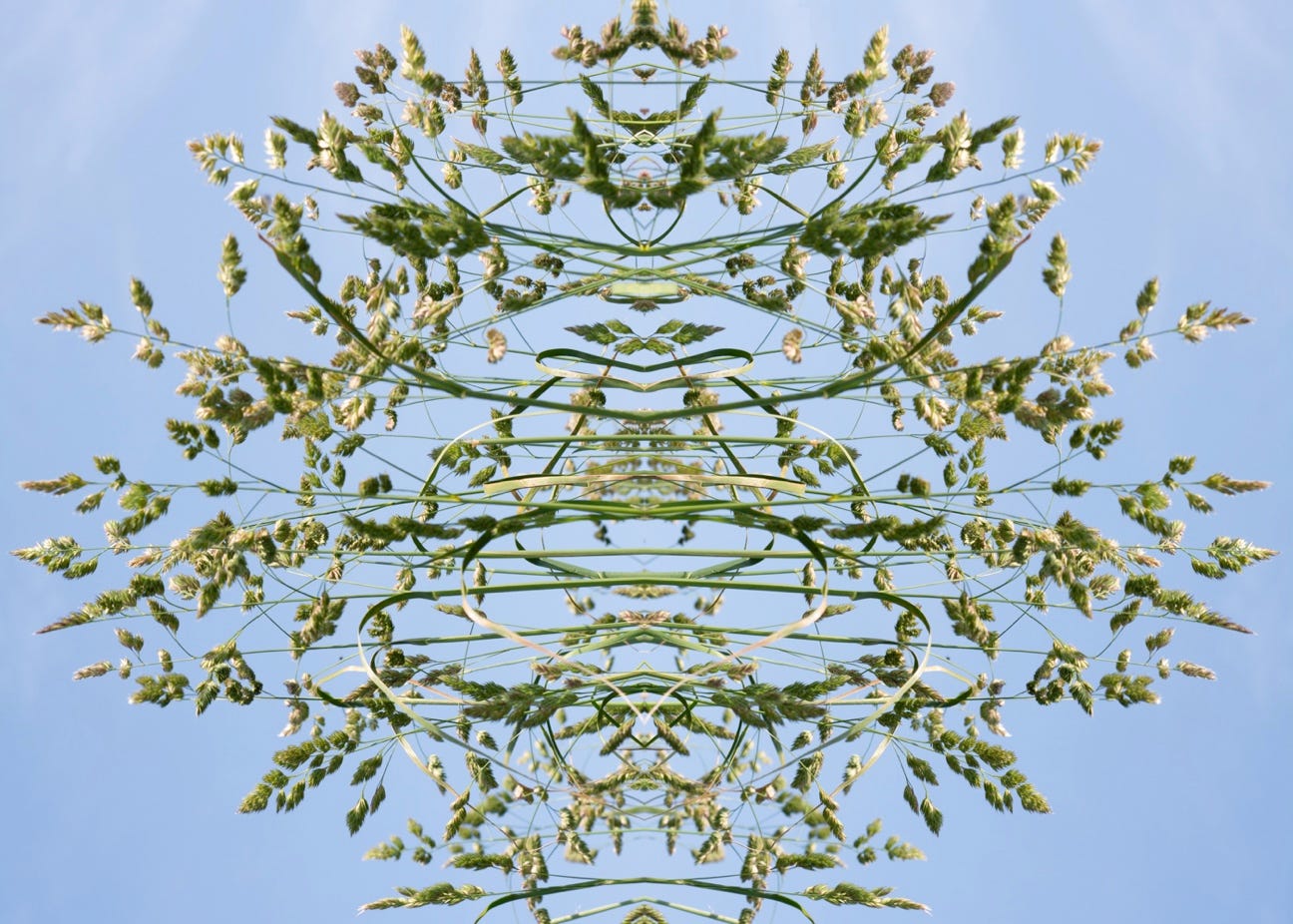
The Orkney-based photographer Rebecca Marr and her long-time collaborator the poet Valerie Gillies have been following their fascination with grass for several years now, resulting in a website, a short film, an exhibition, a series of workshops and now a book of poetry and photographs: When the Grass Dances.

So this week’s Life Boat is one for the landlubbers. I’m delighted to have Valerie and Rebecca aboard to share something of the their work. I’ll hand over to them:
When the Grass Dances
We are thrilled to be guest crew on Samantha's Life Boat this week and we've stowed a few grassy passengers on board with us. Once you become aware of an aspect of nature - and it's happened to us separately before - to Val with wells and rivers, and to Rebecca with clouds and seaweed - the interest becomes so intense that they always travel with you.
Artists notice this, all senses are involved in the observation, and in addition for collaborative artists, a sixth sense comes into play. This was our experience and the resulting work - in this case a book - feels like it was made by neither of us individually but hovers outside of us.
Silver Hair-grass
Aira caryophyllea

Beyond the sandy path
a slope opens to the sky.
A gleam and a glint
dazzle, burnished silver
stands out in a birr.

Strange, the phenomenon of light
flashing from the grass.
Glossy panicles shake loose
and stems are blown
into brilliance by the wind.

Around the head of the land
silvery changing-grass
shines its halo. These things exist
through rays. Ready to move on,
the grasses walk alongside.

Valerie Gillies
‘Ready to move on, the grasses walk alongside.' We find the companionship of grass very moving. There is an old Scots saying, 'The grass is a warm freend'. And it also makes us consider our own friendship as artists, one where it is hard to disentangle the companionship from the collaboration.
Coming to the grasses collaboration, we worked the way we always do: in conversation between our practices. Working across two mediums we respond to each other's work and also respond to the spaces offered around our work. By this we mean the findings we share and the experiences which we have had separately. Behind any one of our poems or photographs there is a sustained period of research, many conversations and many versions that came before. These are distillations. Time, consideration, listening.
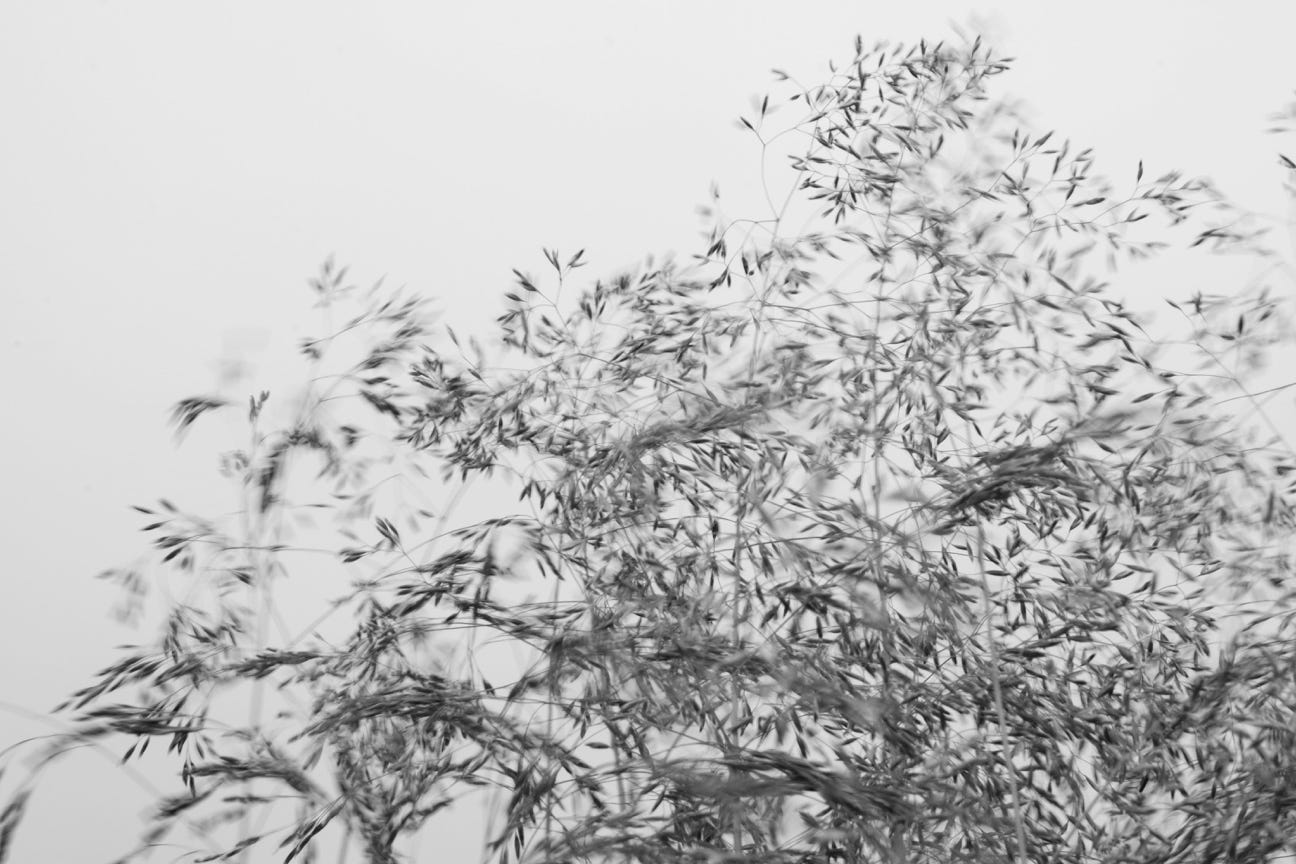
The grasses gave us a focus outside of ourselves. They became acquaintances when we were missing our usual company and occupations during the dark days of 2020. We found that the grasses represented an inner strength - an ability to survive, even thrive, after being trampled on.
Our book When the Grass Dances is a publication that has six years of work behind it and pleasingly divides up in to six parts that in many ways mirror our experience of understanding grasses. (We should divulge that when we say grasses we include the grass like graminoids, sedges and rushes.)
The book begins with the characteristics of grass when we start to identify them as distinct species. One of the moments that drew us to that subject happened in Orkney when we avoided the bonxies1, took the small stone steps carved into the hill and sat down in a bowl of grass at the Brough of Deerness. In the cradle of green we started to wonder about the nature of grass.
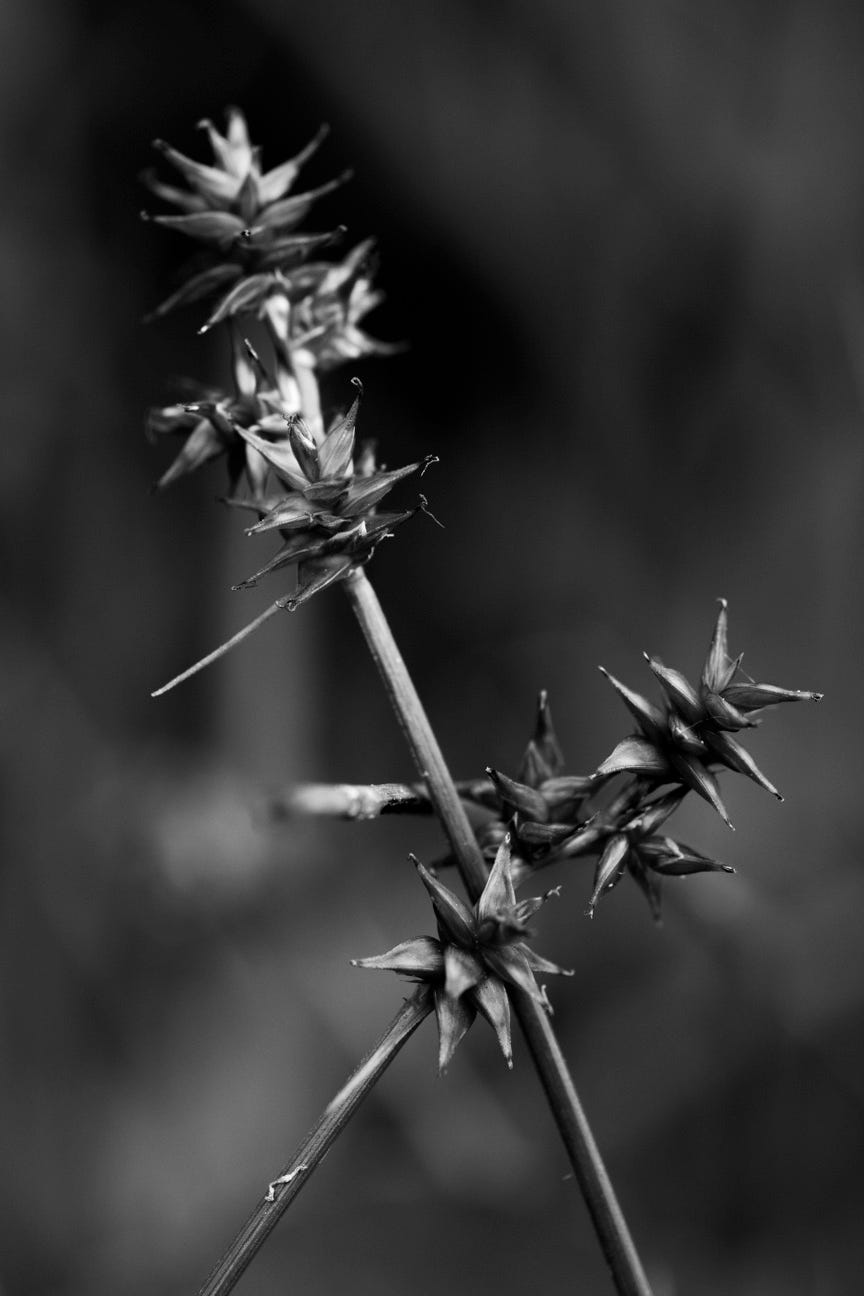
Star Sedge
Carex echinata

I am the tiny star-sedge
looking to the sky above my head

I'm growing, spreading star-wise
closely linked to starry skies

Valerie Gillies
In the next chapter, on movement, the species are active, dancing, waving, floating, they have their own momentum. Following on come the creatures whose home is in the grass, and after them, the humans arrive to use the grasses.
I think it’s fair to say we were taken aback at the interconnectedness between humans and grasses. There is a symbiosis, two species living in close association to the advantage of both. If we take a quote from the Botanical Society of Britain and Ireland’s handbook Grasses of the British Isles about the success of grasses, and transplant the word humans for grasses we read this:
Humans are an extraordinarily successful group and their success has been based on three recurring themes:
(1) their ability to adapt to changing environments;
(2) their ability to coexist with grass and grazing animals;
(3) their possession of a very distinct life-form that remains faithful to a single architectural idea but which has almost endless, and often very ingenious, variations.
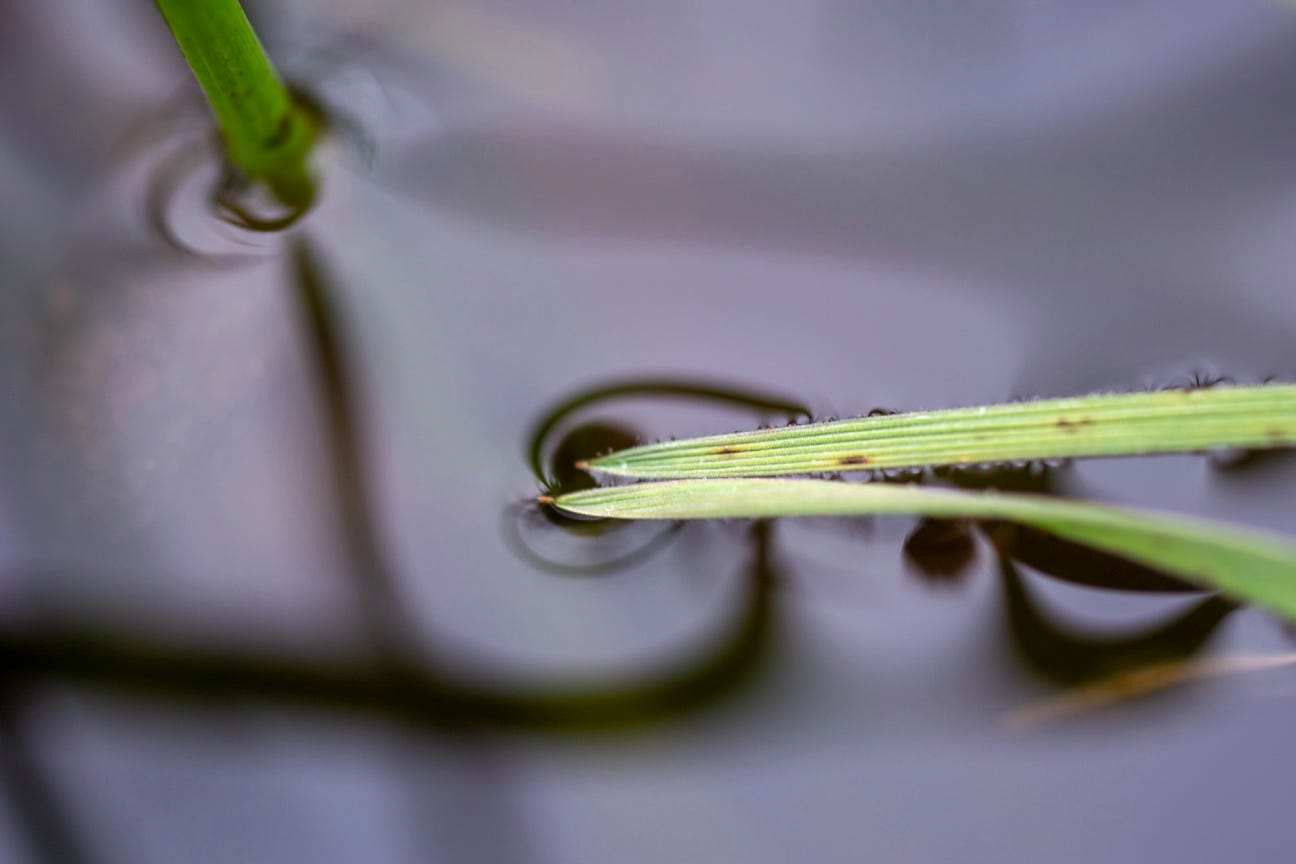
We are more aware now of our relationships with the more-than-human world and we have been grateful to Robin Wall Kimmerer whose book Braiding Sweetgrass gave us the confidence to articulate our own culture of the grasses in Scotland. We became open to natural wisdom and we started to think about what the grasses could teach us.
The grasses project has been expressed in several iterations, as workshops, in exhibitions, as events, each one distinct, and to us surprisingly different. The first 'publication' would have been the Kist o Wild Grasses, a loose-leaf collection of poems and photographs in a box made using marram grass. It has a life beyond us at Maggie's Centre in Edinburgh where people use it as a self-prescription, a diversion or a meditation.
We hope this new book can be used in the same way. Green is good for us, and even thinking about nature, or looking at art about nature, reading words about nature can have a healing effect.
Bright green of the grasses around the spring

Bright green of the grasses around the spring
show the place where you’ll find healing

Valerie Gillies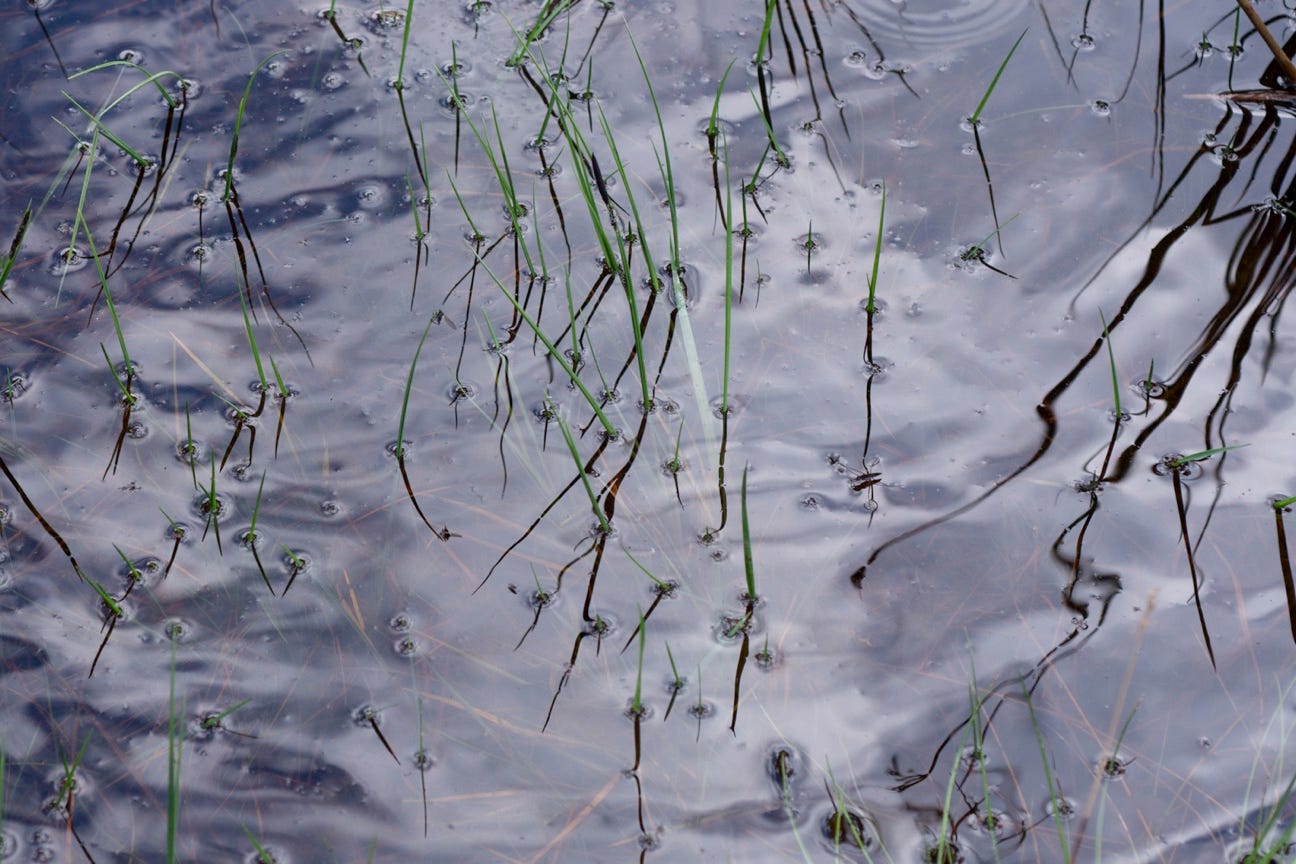
The final chapter is about renewal. This is the lesson grass can teach us: healing is always possible, even if a cure is not. Grass grows from the root not the tip. That lesson is a gift.
Writer Cal Flyn called our collaboration :
'a celebration of greenery in its many wondrous forms and in every changeable season —from rushes to sedge, wild oats to hemp—and we find it shivering with life and beauty. This is florilegium as devotional text, a botanical catalogue of great artistic ambition.'
Well, as you can imagine we loved that, and in particular, the idea of a florilegium. In the Latin it means a bouquet, which is a translation of the Greek anthologion. Our anthology of grasses, a bouquet proffered as a gift.
We'll leave the last words to another author, Graham Harvey from his book The Forgiveness of Nature: The Story of Grass
'...the eternal gift of grass, the freedom of the open sky, the freedom to be fully alive.'
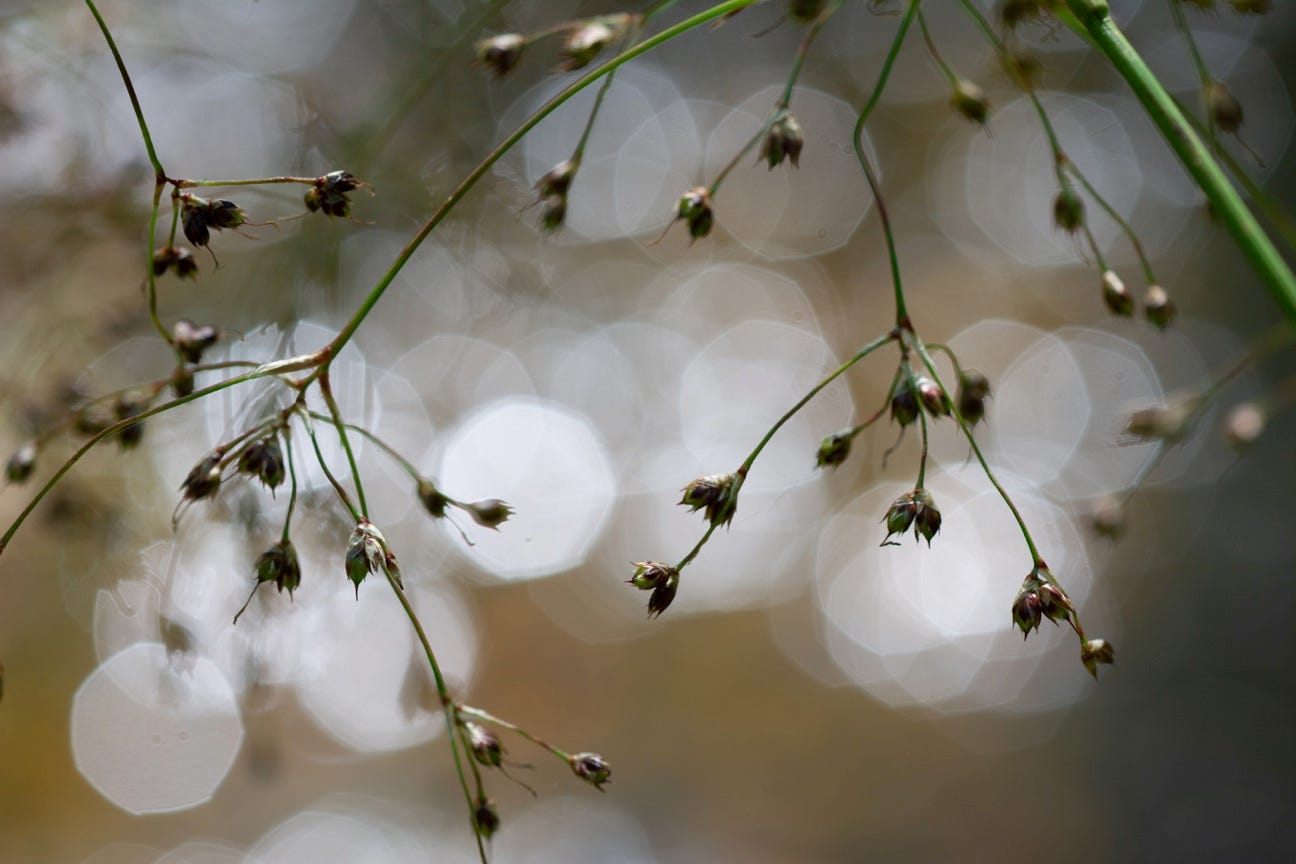
Great Wood-rush
Luzula sylvatica

Yes by a burn in Achnagairn woods
the gleam that lives among the leaves
silvers our land, lights luminous globes,
lamps that shine in the darkest weather.

Valerie Gillies
Find out more at
The book can be requested at your local bookshop or through Luath Press.

Rebecca and Valerie’s exhibition Buss o’Gress/Tuft of Grass is on at the Pier Arts Centre, Stromness until September 20th.
The Life Raft Co-Creating Community
You are warmly welcomed to join our weekly creative co-working session on Zoom. Our meetings are a little Life Raft of shared creativity in these stormy times. It’s very simple. We just say hello at the start and say what we plan to work on and then leave our cameras on and work together in companionable silence. We start at 3pm UK time and finish around 4.30pm. Just click the link below to join us. If you can’t make it live I share a recording to the paid subscriber chat each week.

That’s all for this week!
Sam
The local name for the great skua, a large seabird like a chunky, dark herring gull, with a tendency to divebomb intruders.
I just watched the film from the link in the article - it’s a wonderful piece full of the beauties of voice and knowing and seeing. What a marvellous half hour - like a fresh breeze through grass indeed.. thank you!
This collaboration sounds wonderful and close to my heart, thanks for the introduction. I walk in fields and hills near my home and have watched the grass grow as tall as me during this long summer. Now it’s changed from vibrant green to a glorious gold and I know it will soon flatten, die back and rest until next spring. Might have to buy the book!